

Table of Contents
- Introduction
- Advanced Driver-Assistance Systems
- Adaptive Cruise Control and Lane Centering
- Electric Vehicle Advancements
- Augmented Reality Dashboards
- Artificial Intelligence in Vehicle Interaction
- Smart Traffic Management
- Autonomous Racing
- Conclusion
Car technology is advancing at an astonishing pace and transforming nearly every aspect of our daily driving experience. Innovations like advanced safety systems and artificial intelligence are making vehicles safer, smarter, and more enjoyable to operate. Whether you are interested in cutting-edge features or simply want a safer daily commute, these changes touch everyone on the road. For drivers exploring new vehicles that lead in technology and safety, premium manufacturers are keeping one step ahead of the curve. Learn more about how these advancements are shaping the next generation of driving and what features to look for in your next vehicle.
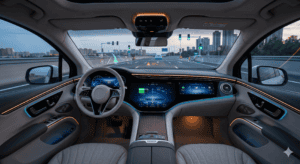
The latest car technology is designed not only to enhance comfort and convenience but also to address long-standing challenges like distracted driving and urban congestion. Automakers and technology pioneers are continually introducing new tools to reduce human error, maximize efficiency, and promote sustainable transportation. These differences are already evident, from the dashboard interface to how our cars communicate with the world outside. As we adapt to a new era of mobility, understanding the role of these innovations can help buyers make smarter, more future-proof decisions.
Advanced Driver-Assistance Systems
Advanced Driver-Assistance Systems, or ADAS, are setting new standards for automotive safety by combining sensors, radar, and cameras to help prevent accidents before they occur. Features like automatic emergency braking, forward collision alerts, and lane departure warnings are now common in new vehicles. According to Consumer Reports, these systems not only reduce accidents but can also minimize the severity of unavoidable crashes, especially in high-traffic or low-speed city environments.
Adaptive Cruise Control and Lane Centering
Adaptive Cruise Control (ACC) and lane centering technologies are making highway travel safer and more efficient. ACC maintains a preset distance from the vehicle ahead by automatically adjusting its speed. Lane centering uses cameras to gently steer the vehicle, keeping it in the middle of the lane even around gentle curves. This combination of features is especially helpful during long drives or daily commutes, reducing driver fatigue and lowering the risk of accidents caused by drifting out of lanes or sudden braking. These systems are now available under numerous names, and their adoption rate is growing substantially worldwide.
Electric Vehicle Advancements
The electric vehicle (EV) segment continues to see groundbreaking improvements. Today’s EVs offer longer ranges, often exceeding 300 miles on a single charge, making them practical for daily use and longer trips. Charging times are dropping too, with new ultra-fast chargers delivering up to 80 percent battery in as little as 30 minutes. Features such as vehicle-to-grid (V2G) technology allow EVs to power home appliances or supply electricity back to the grid during emergencies, increasing the value and versatility of these vehicles. As a result, EVs are becoming more accessible and attractive to a broad range of drivers.
Another exciting trend is the rapid expansion of charging infrastructure, alleviating concerns about range anxiety among new EV adopters. Government incentives and more competitive pricing are fueling greater adoption worldwide. The rise of electric cars is shaping greener cities and cleaner air.
Augmented Reality Dashboards
Augmented reality (AR) dashboards and head-up displays (HUDs) are reshaping how drivers interact with critical information. These systems project navigation directions, speed data, and even hazard alerts directly onto the windshield. By keeping essential visuals within the driver’s line of sight, AR dashboards reduce distractions and support faster decision-making. This not only streamlines in-car navigation but also enhances safety by keeping eyes on the road, not the dashboard.
Artificial Intelligence in Vehicle Interaction
Artificial intelligence is revolutionizing in-car interactions by making them smarter and more personalized. AI-enabled systems can detect signs of driver fatigue, adjust vehicle settings based on preferences, and even suggest entertainment options to keep the driver alert. For instance, some vehicles have features that modify the cabin’s lighting, temperature, and audio to help re-energize the driver during long journeys. Advances in voice recognition and in-car assistants are also making hands-free navigation and communication more reliable than ever before, improving both convenience and safety.
Smart Traffic Management
Technology’s impact on driving extends well beyond the vehicle itself. Cities are adopting smart traffic management systems that use sensors and artificial intelligence to monitor conditions, control signals, and ease congestion. In Pittsburgh, a pilot program with AI-powered traffic lights demonstrated the ability to reduce delays and emissions by responding to real-time traffic patterns. These “smart” intersections not only make commutes faster but also play a key role in reducing urban pollution and improving city life overall. The transition to smart traffic systems is viewed as a crucial step toward intelligent, connected mobility.
Autonomous Racing
Autonomous racing is pushing the limits of car technology in exhilarating ways. Competitions like Roborace showcase vehicles that race without human drivers, relying solely on AI-driven decision-making and rapid data processing. These races create a laboratory environment for testing new algorithms, hardware, and safety protocols at high speeds. The breakthroughs developed for autonomous racing often trickle down into everyday vehicles, accelerating the adoption of safe, efficient automation on public roads. Autonomous racing is not just a spectacle; it is also a catalyst for safer, smarter vehicles for everyone.
Conclusion
The automotive landscape is changing fast as technological advancements reshape what it means to drive. From the safety offered by ADAS to new energy solutions in EVs, the result is a smarter, more sustainable, and vastly safer journey for all drivers. Innovations like AR dashboards and AI-driven personalization show that the human experience remains central, even as computers take on an increasing share of the responsibility. Staying informed about these developments will be crucial as we all move toward a more connected and autonomous future on the road.