
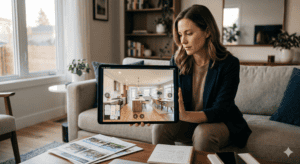
Walk through any modern property campaign and you will see virtual tours sitting alongside photography, floor plans, and listing descriptions. They are no longer a novelty. Buyers expect them. Sellers ask about them. Agents rely on them to filter serious interest from casual browsing.
But here is where things get more interesting. Virtual tours are not just a “nice to have” feature. When used properly, they can change how leads are generated, qualified, and converted. When used poorly, they simply add production cost without improving results.
The difference comes down to how and when they are used.
Understanding Where Virtual Tours Actually Add Value
Virtual tours give buyers something traditional listings cannot. They offer control. Instead of being guided through a property, the buyer chooses what to look at, how long to stay, and what matters most.
According to a report by the National Association of Realtors, listings that include virtual tours receive significantly more engagement compared to those that rely on static images alone. The reason is simple. Buyers feel more confident exploring a property on their own terms before committing to an inspection.
That confidence directly impacts lead quality. Instead of generating a high volume of low intent enquiries, virtual tours tend to attract fewer but more serious prospects. People who reach out after completing a full tour are already further along in their decision process.
This is where virtual tours start to outperform traditional approaches.
When Virtual Tours Outperform Physical Inspections
There are specific scenarios where virtual tours do more than just support a listing. They become the primary driver of enquiry.
One of the clearest examples is with interstate or overseas buyers. These buyers cannot attend open homes easily, so the virtual experience becomes their first real interaction with the property. In these cases, a well executed tour can replace the initial inspection entirely.
Another scenario is high demand listings where time is limited. Instead of running multiple crowded open homes, agents can use virtual tours to pre qualify buyers. Only those who are genuinely interested will book a physical inspection, saving time for both the agent and the seller.
Virtual tours also perform strongly in off market or pre market campaigns. By sharing a private tour link with a curated group of buyers, agents can create a sense of exclusivity while still providing enough detail to drive serious interest.
From a real estate marketing perspective, this approach helps shift the focus from volume to intent. Rather than chasing as many enquiries as possible, the goal becomes attracting the right enquiries.
Where Virtual Tours Fall Short
Despite their advantages, virtual tours are not a universal solution. There are situations where they simply cannot replace an in person experience.
Properties that rely heavily on atmosphere often struggle in a digital format. Think heritage homes, architecturally unique spaces, or properties with standout views. These elements are difficult to capture fully through a screen. Buyers may appreciate the layout online, but still need to feel the space in person before making a decision.
Another limitation is emotional connection. While virtual tours provide information, they do not always create the same emotional response as walking through a home. For some buyers, that emotional trigger is what drives action.
There is also the risk of overexposure. If a virtual tour reveals too much without building curiosity, some buyers may feel they have already seen everything they need. Instead of encouraging inspections, the tour becomes a substitute that reduces urgency.
This is why strategy matters. A virtual tour should guide the buyer journey, not replace it entirely.
Designing Virtual Tours That Convert, Not Just Impress
Not all virtual tours are created equal. The difference between a high performing tour and a forgettable one often comes down to small details.
First, navigation needs to be intuitive. If buyers struggle to move through the property, they will drop off quickly. The goal is to make exploration feel effortless.
Second, the tour should highlight key selling points deliberately. This might include positioning the camera to emphasise natural light, showcasing transitions between indoor and outdoor spaces, or drawing attention to recently renovated areas.
Third, calls to action need to be embedded within the experience. Whether it is booking an inspection, requesting more information, or contacting the agent, the next step should be clear and easy.
Agents who treat virtual tours as passive content often miss this opportunity. The most effective tours are designed as conversion tools, not just visual assets.
Using Virtual Tour Data to Improve Follow Up
One of the most overlooked benefits of virtual tours is the data they generate. Unlike physical inspections, digital tours can show exactly how buyers interact with a property.
You can see which rooms they spend the most time in, where they drop off, and what features capture attention. This information can be used to prioritise leads and personalise follow up conversations.
For example, if a buyer spends a significant amount of time exploring the kitchen and living areas, the agent can tailor their follow up to highlight those features. This makes the conversation more relevant and increases the likelihood of conversion.
Over time, this data also helps refine future campaigns. Patterns begin to emerge, showing what buyers value most in a particular market or property type.
Balancing Virtual and Physical Experiences
The most effective campaigns do not choose between virtual and physical inspections. They combine both in a way that strengthens the overall buyer journey.
Virtual tours work best as a filtering tool. They allow buyers to explore properties in depth before committing their time. Physical inspections then become more meaningful, with higher intent and stronger engagement.
As one property strategist, Michael Yardney, has noted, buyers today expect transparency and convenience in equal measure. Virtual tours provide the convenience, while in person inspections deliver the final validation.
When these two elements are aligned, the result is a more efficient and effective sales process.
Conclusion: Using Virtual Tours With Intent, Not Assumption
Virtual tours have earned their place in modern property campaigns, but they are not a shortcut to better results. Their impact depends entirely on how they are used.
When applied in the right scenarios, they can reduce wasted inspections, improve lead quality, and accelerate decision making. When used without strategy, they risk becoming just another feature that fails to move the needle.
The key is to treat them as part of a broader real estate marketing approach. One that focuses on guiding buyers through a structured journey rather than simply showcasing a property.
Agents who understand this balance will not just generate more leads. They will generate better ones.