

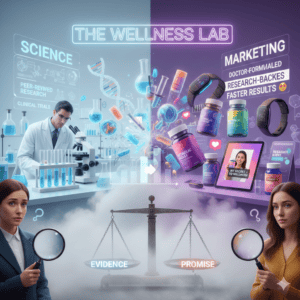
Consumers have never had more access to health and wellness products promising faster results, fewer side effects, and greater convenience. From wearable health trackers to personalized supplements, innovation has become a powerful selling point. However, as new products reach the market at record speed, the gap between scientific validation and marketing narratives has grown increasingly difficult for consumers to navigate.
This tension is especially visible in weight management, metabolic health, and preventative wellness, where demand is high, and regulation often lags behind innovation. Understanding how to evaluate emerging health products has become a necessary skill, not just a bonus for informed consumers.
The Growing Appeal of Convenience-Driven Health Solutions
Modern lifestyles prioritize efficiency, and health products are no exception. Many consumers are drawn to solutions that promise results without major lifestyle disruptions, such as skipping injections, avoiding strict routines, or eliminating frequent doctor visits. This demand has driven companies to package complex medical concepts into simplified, consumer-friendly formats.
While convenience can improve accessibility, it can also mask important trade-offs. When a product is marketed primarily on ease of use rather than measurable outcomes, consumers may overlook whether the solution is supported by clinical evidence or regulatory oversight.
When Scientific Language Becomes a Marketing Tool
One of the most common tactics used in health marketing is the selective use of scientific terminology. Words like “clinically inspired,” “research-backed,” or “doctor-formulated” can sound authoritative without necessarily reflecting peer-reviewed evidence or approved medical use.
In some cases, companies reference existing medical treatments to lend credibility to adjacent products. This creates a gray area where consumers assume equivalence between prescription therapies and over-the-counter alternatives, even when the delivery method, dosage, or absorption mechanisms differ significantly.
Understanding the Role of GLP-1 in Public Health Conversations
Glucagon-like peptide-1 (GLP-1) medications have become a frequent topic in discussions about diabetes management and weight loss. These treatments are well-documented in clinical settings, with established dosing, administration methods, and medical supervision requirements.
As public awareness of GLP-1 has increased, so has interest in alternative delivery formats. This has led to growing curiosity and confusion around claims around transdermal GLP-1 products, particularly when marketed alongside or compared to prescription options without equivalent regulatory approval.
The Evidence Gap Between Prescription Treatments and Consumer Products
Prescription medications undergo rigorous testing to evaluate safety, efficacy, absorption, and long-term outcomes. In contrast, consumer wellness products may rely on theoretical mechanisms or early-stage research without large-scale human trials.
This distinction matters because how a compound enters the body significantly affects how it works. Without proper absorption or bioavailability, even well-known compounds may fail to deliver the promised benefits. When marketing does not clearly address these limitations, consumers may overestimate a product’s effectiveness.
The Influence of Social Media and Influencer Endorsements
Social platforms have become primary discovery channels for new health trends. Influencers often share personal experiences that resonate with audiences, creating a sense of trust and relatability. However, anecdotal success stories do not replace controlled clinical research.
Algorithms tend to reward compelling narratives over cautious analysis, which can amplify optimistic claims while minimizing disclaimers or uncertainties. This environment makes it harder for consumers to distinguish between evidence-based guidance and sponsored enthusiasm.
Regulatory Oversight and What It Does and Doesn’t Cover
Regulatory frameworks vary widely depending on whether a product is classified as a drug, supplement, or cosmetic. Many wellness products fall into categories that allow them to reach the market without pre-approval, provided they avoid explicit disease-treatment claims.
While this flexibility supports innovation, it also places more responsibility on consumers to evaluate credibility. Labels and disclaimers often meet legal requirements while still leaving room for misinterpretation, particularly for individuals unfamiliar with regulatory nuances.
How Consumers Can Evaluate Health Claims More Critically
Navigating the modern wellness landscape requires a more analytical approach. Rather than focusing solely on promises, consumers benefit from asking practical questions about how a product works and what evidence supports it.
Key considerations include whether claims reference peer-reviewed studies, whether those studies involve humans or only lab models, and whether the product explains limitations as clearly as benefits. Transparency is often a stronger signal of credibility than bold guarantees.
Why Skepticism Is Not the Same as Cynicism
Questioning health claims does not mean rejecting innovation altogether. Many breakthroughs begin as experimental concepts before becoming validated treatments. The issue arises when marketing outpaces evidence and presents emerging ideas as established solutions.
A healthy level of skepticism encourages better decision-making and reduces the likelihood of disappointment or unintended consequences. It also incentivizes companies to invest in stronger research and clearer communication.
The Importance of Informed Decision-Making in Modern Wellness
As the health industry continues to evolve, consumers are increasingly positioned as decision-makers rather than passive recipients of care. This shift brings both empowerment and responsibility. Understanding the difference between medically approved treatments and wellness-oriented products is essential.
Ultimately, the line between science and marketing will continue to blur as innovation accelerates. Staying informed, asking the right questions, and recognizing the limits of convenience-based solutions can help consumers navigate this complex landscape with greater confidence.
Looking Ahead: A More Informed Wellness Landscape
The future of wellness innovation will likely bring even more novel delivery systems, personalized interventions, and technology-driven solutions. As these products emerge, the line between science and marketing will remain fluid. The determining factor for consumers will be how well they can evaluate credibility amid ongoing change.
By prioritizing evidence, asking critical questions, and remaining open, but cautious, about new developments, consumers can navigate this landscape more effectively. In doing so, they help shift demand toward products and practices that value scientific integrity as much as innovation itself.