

Key Takeaways
- Flexible scheduling makes education more accessible for a wide variety of learners.
- Work-life balance and reduced stress levels are clear benefits of online learning’s flexibility.
- Personalized, adaptable learning can lead to better academic performance and reduced dropout rates.
Introduction
Modern learners are often caught between multiple responsibilities, including professional obligations, family care, and personal ambitions. This evolving lifestyle creates new demands for the delivery of education. Flexible scheduling, a key feature of online education, addresses these demands by providing greater control over when and how learning takes place. Whether you’re looking to return to school, advance your career, or expand your knowledge, ASU programs online are paving the way for a more adaptable and inclusive educational experience.
Online learning platforms offer students accessible resources and self-paced study options, making it easier to integrate education into their daily routines. This flexibility is especially valuable in today’s rapidly changing world, enabling a broader group of learners to participate in higher education without sacrificing other essential aspects of their lives.
Accommodating Diverse Learners
One of the standout benefits of flexible scheduling in online education is its ability to meet the unique needs of individual students. For many, rigid schedules inherent to traditional learning environments can act as a barrier to education. Individuals with full-time jobs, parents balancing childcare, military personnel, and even those pursuing personal passions are increasingly turning to online courses—such as those offered by Arkansas State University—to pursue their goals at their own pace.
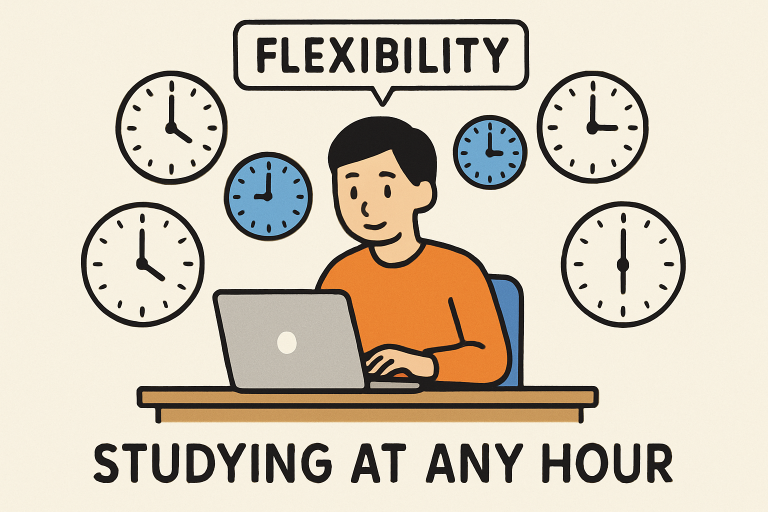
The inclusivity of flexible scheduling means that learners are not bound by location or time. Someone can complete quizzes before heading to a shift job, review readings late at night after children are asleep, or participate in class discussions from another country. By extending access to nontraditional students, this approach closes gaps and broadens horizons within the realm of higher education. According to Boston University Questrom School of Business, these flexible options are transforming the way institutions engage diverse groups of learners.
Enhancing Work-Life Balance
Professionals considering further education often worry about balancing it with their demanding schedules. Flexible online programs help eliminate many of those concerns. By allowing courses and assignments to be completed outside of work hours, learners can avoid sacrificing job performance or family time for academic growth.
This advantage is particularly pronounced among students pursuing career advancement or a career change. Being able to set one’s own pace and select times that align with peak productivity directly contributes to reduced stress and better mental health. Numerous studies support the notion that flexible scheduling promotes a healthier work-life balance, which in turn leads to enhanced focus and effectiveness in both work and academic settings.
Supporting Students with Health Challenges
Students with health conditions often struggle to meet the attendance and participation requirements of conventional classrooms. Online education—especially when paired with flexible scheduling—enables these individuals to continue their studies by choosing times when they feel most capable of engaging with the material. This adaptability not only prevents disruptions in education during periods of illness but also helps create a more compassionate and inclusive learning community.
Moreover, recorded lectures, downloadable resources, and adaptable timelines for assignments make it easier for these students to customize their academic experiences. By providing increased autonomy, online education fosters resilience and persistence in individuals navigating both learning and health-related challenges.
Facilitating Personalized Learning Experiences
Every learner absorbs information differently—some may need extra time to master complex concepts, while others may excel and progress more quickly through certain materials. Flexible scheduling enables students to focus on challenging topics and allocate less time to areas where they already possess a strong understanding.
This individualized approach not only increases comprehension and long-term retention but also fosters self-motivation and independence. Adaptive online platforms are enabling students to utilize a range of multimedia resources—such as video lectures, interactive quizzes, and discussion boards—to determine which methods work best for their individual learning preferences.
Improving Academic Performance
Empowering students with choice over study periods results in higher levels of motivation and engagement. When learners can work during their most productive hours and fit education around their other obligations, they’re more likely to persist in their studies and attain better outcomes. Research has consistently shown that self-directed, flexible learning is correlated with improved grades and a deeper comprehension of material.
Flexibility also supports lifelong learning by instilling critical project management and time management skills. As education becomes an ongoing journey rather than a fixed phase of life, being able to integrate studies into one’s daily routine will become an essential component of both career development and personal growth.
Reducing Dropout Rates
High dropout rates have long been a concern in traditional educational settings, often caused by students’ inability to balance school with other life challenges. With the introduction of flexible, student-centered scheduling, this problem is notably diminished. Students are less likely to fall behind or withdraw when they are empowered to set their educational pace. Flexible learning options have been shown to correlate with increased retention, as discussed in research from Drexel University. Online programs help keep students on track for graduation by eliminating rigid scheduling conflicts.
For adult learners and working professional,s especially, this flexibility can mean the difference between persisting and dropping out, resulting in more graduates and a more educated workforce.
Final Thoughts
Flexible scheduling in online education is revolutionizing access, engagement, and outcomes for learners worldwide. By prioritizing adaptability and student autonomy, online programs are enabling individuals from diverse backgrounds to achieve success without compromising other important aspects of their lives. Whether striving for career advancement, managing a busy household, or overcoming health challenges, students can now take full control over their educational journeys—empowered by the possibilities that flexible online education provides.