
Introduction

As of May 2026, the digital landscape has undergone a seismic shift. We have moved away from simple keyword stuffing. Instead, we see a sophisticated, AI-integrated ecosystem. Modern businesses no longer see online promotion as an extra feature. It is now the main engine for growth. Retail e-commerce sales have surpassed $6.3 trillion worldwide. More than 54% of consumers prefer to shop online. This means the need for online visibility has never been higher.
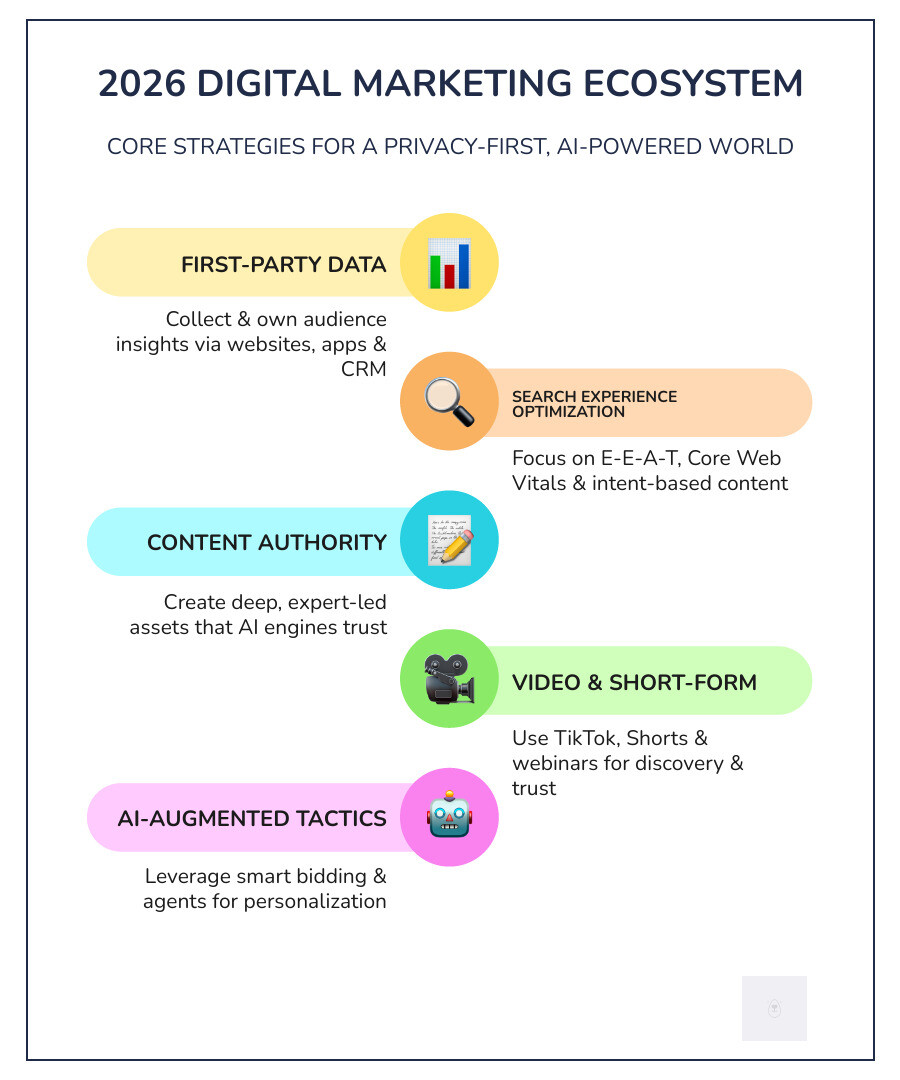
The current era is defined by the end of third-party cookies. It is also shaped by the rise of “Generative Engine Optimization” (GEO). To compete, brands must go beyond separate, disconnected marketing actions. We must embrace a complete framework. This framework prioritizes first-party data and real human connection. This guide will explore the most effective ways to navigate this complex environment. We will ensure your brand stays relevant. This is crucial in an age where 3.5 billion people use social media. Also, the average daily phone usage has climbed to nearly five hours.
The Fundamental Components of Digital Marketing Strategies

A successful digital marketing strategy is not merely a collection of ads; it is a long-term, high-level plan designed to achieve specific business objectives. While a campaign might focus on a single product launch over three months, a strategy provides the overarching “why” and “how” for all digital interactions. In 2026, an effective strategy is built upon four pillars: clear objectives, deep audience intelligence, disciplined budgeting, and real-time metrics.
Setting goals requires the SMART framework—Specific, Measurable, Attainable, Relevant, and Time-bound. For instance, a company might aim to increase its email subscriber base by 50% within six months to capitalize on the impressive average ROI of $36 for every $1 invested in email marketing. Understanding the audience involves creating detailed buyer personas that go beyond demographics to include digital behaviors, such as which AI assistants they use for research. Furthermore, with the total deprecation of third-party cookies, a robust first-party data strategy—collecting information directly through website analytics and customer accounts—is now a non-negotiable requirement for personalization. Businesses seeking comprehensive frameworks for their digital presence can find valuable insights in established Digital Marketing Guidelines that emphasize structured approaches to online engagement.
The distinction between strategy, campaigns, and tactics is crucial. Our strategy is the overarching game plan, aligning with core business goals. A campaign is a targeted, time-bound effort to achieve a specific objective within that strategy (e.g., a holiday sales campaign). Tactics are the granular actions taken within a campaign (e.g., running a specific Facebook ad, sending a segmented email). Without a clear strategy, campaigns and tactics become disconnected efforts, rarely moving the needle effectively.
High-Impact Channels and Levers for 2026
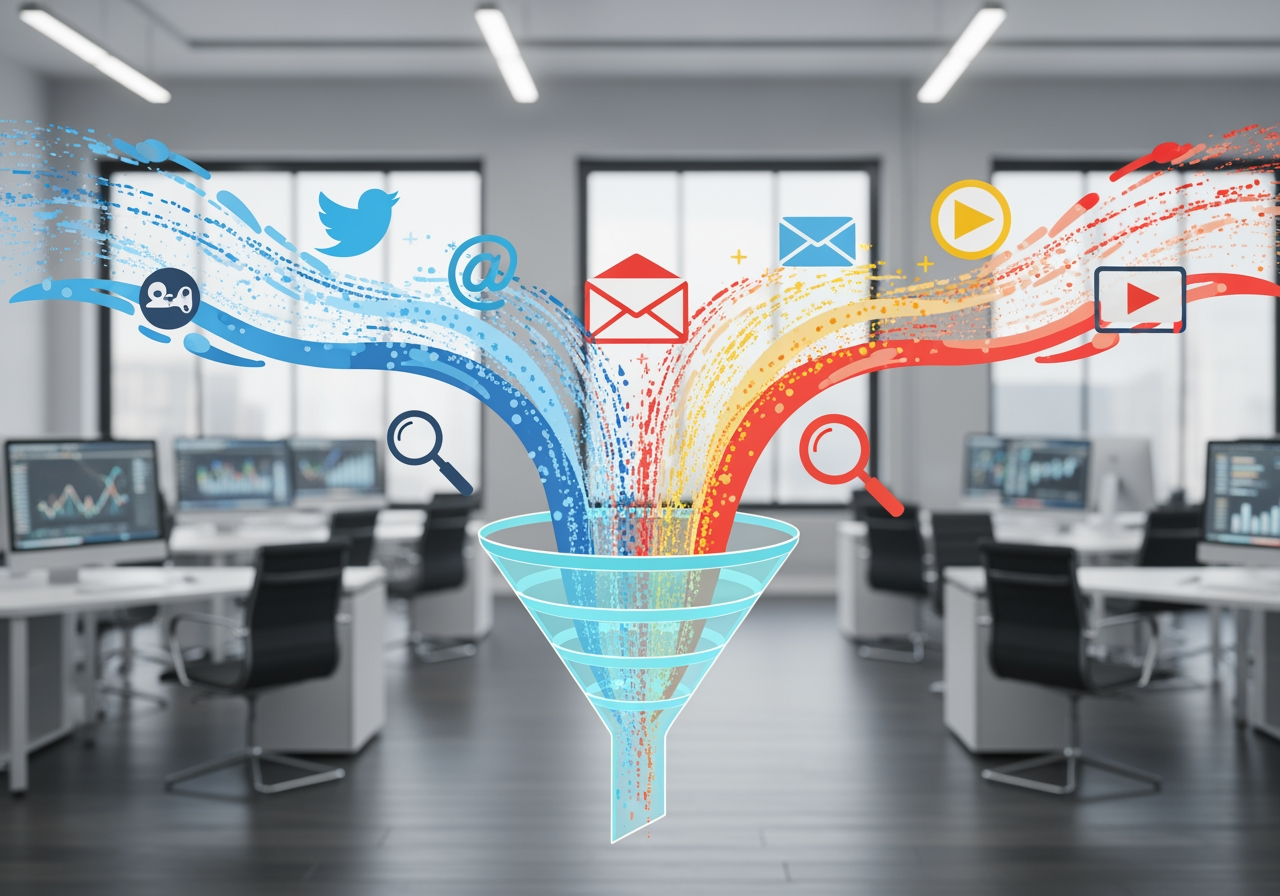
The levers available to modern marketers have evolved to include sophisticated AI agents and immersive video content. Inbound marketing remains the gold standard, generating three times more leads than traditional outbound methods while reducing costs by up to 62%. By providing value through educational blogs and real-world case studies, brands can attract high-intent users who are actively seeking solutions. This approach builds trust and positions the business as an authority, crucial in today’s competitive landscape.
Content marketing in 2026 is no longer about volume; it is about “Content Authority.” Search engines and AI discovery tools prioritize deep, expert-led pieces over shallow, high-frequency posts. This is where advanced AI-powered digital marketing strategies become essential, allowing businesses to analyze vast datasets to predict what topics will resonate most with their target audience and even assist in content generation. These AI tools can help identify content gaps, optimize for generative search engines, and personalize content delivery. Additionally, video marketing has become the dominant format for engagement, with 93% of marketers reporting a positive ROI. Short-form videos on platforms like TikTok and YouTube Shorts serve as the primary discovery engine for Gen Z and Millennial consumers, while long-form webinars build the trust necessary for B2B conversions. The nearly 3.5 billion social media users worldwide underscore the importance of integrating video into a comprehensive social media marketing strategy.
Search Experience Optimization (SXO) and Digital Marketing Strategies
Traditional SEO has transitioned into Search Experience Optimization (SXO). In 2026, ranking #1 on a search results page is only half the battle; the other half is ensuring the user finds the exact answer they need within seconds. Google’s algorithms now heavily weigh E-E-A-T (Experience, Expertise, Authoritativeness, and Trustworthiness). This means that local businesses, such as those seeking robust Ogden Utah Digital Marketing Strategies For Local Business Success, must focus on localized content and authentic customer reviews to maintain visibility. Technical SEO also remains critical, as 53% of users will abandon a mobile site if it takes longer than three seconds to load. We also see a growing need for Generative Engine Optimization (GEO), structuring content so AI search tools cite it in their generated answers. This involves clear definitions, FAQ sections, and establishing topical authority. For businesses looking to dominate their local search results and improve their overall online presence, partnering with a dedicated Utah SEO & Digital Marketing Company Delivering Results can provide the specialized expertise needed.
The Evolution of Paid Media and Digital Marketing Strategies
Paid advertising has become increasingly automated, with AI-driven “Smart Bidding” taking center stage. Modern Pay-Per-Click (PPC) strategies involve fewer, better-funded campaigns that allow machine learning models enough data to optimize for conversions rather than just clicks. This shift moves marketers from manual bid adjustments to strategic oversight and creative development. Partnering with a specialized team, such as a Linear Design Adwords Agency, allows businesses to navigate these complex automated systems effectively, ensuring that ad spend is allocated toward the highest-value leads and optimizing for return on ad spend. Remarketing has also shifted; instead of following users across the web with intrusive banners, brands now use first-party data to deliver highly relevant ads within social feeds and email newsletters, respecting privacy while maintaining effectiveness. The intricacies of managing successful paid campaigns, especially with Google’s evolving algorithms, highlight the value of dedicated Google Ads Management services that stay abreast of the latest best practices and AI capabilities.
A Step-by-Step Guide to Building Your Strategy
Building a digital marketing strategy from scratch requires a disciplined, seven-step approach.
- Conduct a Comprehensive Audit: First, we conduct a comprehensive audit of your existing digital assets, identifying which channels are currently driving revenue and which are underperforming. This includes website performance, social media engagement, email list health, and current SEO rankings.
- Perform a Competitor SWOT Analysis: Second, we perform a thorough competitor SWOT (Strengths, Weaknesses, Opportunities, Threats) analysis to identify gaps in the market and uncover unique selling propositions. For niche industries, such as home services, implementing specialized Roofing digital marketing strategies can provide a significant competitive advantage by targeting hyper-local search intent and addressing specific customer pain points.
- Define Your Ideal Customer Profile (ICP): The third step is to define your Ideal Customer Profile (ICP) and map their non-linear journey across touchpoints. This involves understanding not just who they are, but where they spend their time online, what problems they need solved, and what influences their purchasing decisions, including which AI assistants they consult.
- Select Your Primary Channels: Fourth, we select your primary channels—typically a mix of search (organic and paid), email, and social media. This selection should be driven by where your ICP is most active and where you can achieve the highest impact given your resources.
- Develop a Content Plan: Fifth, we develop a content plan that addresses every stage of the customer funnel, from awareness to retention. This includes pillar content for SEO, engaging video scripts for social platforms, and personalized email sequences.
- Ensure Infrastructure Readiness: Sixth, we ensure your infrastructure is ready for traffic; this includes high-converting Landing Page Design that guides users toward conversion, robust analytics setup, and seamless CRM integration to track leads through the sales pipeline.
- Establish a 90-Day Roadmap: Finally, we establish a 90-day roadmap with clear milestones and measurable KPIs to ensure the team remains focused on execution rather than just planning. This agile approach allows for continuous optimization and adaptation.
Measuring Success: KPIs, Metrics, and Avoiding Common Pitfalls
In 2026, the most significant mistake a business can make is focusing on vanity metrics like “likes” or “impressions.” Instead, successful strategies prioritize business-impact KPIs. Customer Acquisition Cost (CAC) and Customer Lifetime Value (LTV) are the two most important metrics for determining long-term viability. A healthy strategy typically maintains an LTV to CAC ratio of at least 3:1, indicating that the value a customer brings over their lifetime significantly outweighs the cost to acquire them.
Furthermore, Conversion Rate Optimization (CRO) has become a continuous process of A/B testing and user experience refinement. Even a 1% increase in conversion rate can result in millions of dollars in additional revenue for enterprise-level brands. This involves constantly testing headlines, calls-to-action, page layouts, and form fields to maximize the percentage of visitors who complete a desired action. Common pitfalls to avoid include neglecting the mobile experience—given that the average American spends over four hours a day on their phone—and failing to integrate data across channels. For instance, insights gained from a well-executed Facebook Ads Management campaign should be used to inform email subject lines and blog topics, creating a unified feedback loop that enhances overall strategy. Without a clear measurement framework and a commitment to data-driven decisions, even the most innovative strategies can flounder.
Adapting to the Future: Staying Ahead in a Post-Cookie World
As we look toward the end of 2026 and beyond, the brands that thrive will be those that treat digital marketing as a growth engine rather than a cost center. The shift toward community-first branding—where companies build owned spaces for customer interaction—is a direct response to the declining organic reach on major social platforms and the increasing desire for authentic connections. Trust has become the new currency; 86% of consumers state that authenticity is a key factor when deciding which brands to support. This means fostering genuine engagement, encouraging user-generated content, and being transparent in all communications.
Staying updated requires a commitment to “failing fast.” Marketers must use analytics to quickly identify unsuccessful campaigns and reallocate budget to proven winners. This agile approach allows for rapid iteration and ensures resources are always directed towards the most effective strategies. By integrating AI as a decision-support system rather than a replacement for human creativity, businesses can achieve a level of personalization that was previously impossible, automating mundane tasks and freeing up human talent for strategic thinking. The future of Digital Marketing Strategies lies in the balance between automated efficiency and genuine, value-driven storytelling, always with an eye on the evolving digital ecosystem.
Frequently Asked Questions about Digital Marketing Strategies
What is the difference between a marketing strategy and a marketing tactic?
A marketing strategy is the long-term, high-level plan that defines your business goals and the audience you want to reach. It provides the “why” and “what” of your marketing efforts. Tactics are the specific, short-term actions you take to execute that strategy, such as running a specific set of Google Ads, publishing a weekly blog post, or sending a targeted email campaign. Tactics are the “how” you achieve your strategic objectives.
How much should a business spend on digital marketing in 2026?
Industry benchmarks suggest that B2B companies should allocate 5-10% of their revenue to digital marketing, while B2C companies often spend 7-12%. However, for early-stage growth companies, this investment can be significantly higher, sometimes as much as 15-20% of projected revenue, to accelerate market share acquisition. The ideal spend ultimately depends on your Customer Acquisition Cost (CAC) relative to your Customer Lifetime Value (LTV), aiming for a healthy ROI.
Why is first-party data so important now?
With the deprecation of third-party cookies by major browsers and increased privacy regulations (like GDPR and CCPA), businesses can no longer reliably depend on external data to track and target users across the web. First-party data—information you collect directly from your customers through your own website, apps, and interactions—is the only privacy-compliant, durable, and reliable way to understand your audience and deliver the personalized experiences that modern consumers expect. It forms the foundation for effective personalization, segmentation, and measurement in a privacy-first world.
Conclusion
The digital marketing landscape of May 2026 demands a sophisticated blend of technical precision and creative authenticity. By focusing on high-impact channels like SXO, PPC, and video, and by grounding every decision in robust first-party data, modern businesses can build resilient strategies that drive measurable growth. The key to success is not just adopting the latest tools, but integrating them into a customer-centric framework that prioritizes long-term value over short-term gains. As the industry continues to evolve, staying flexible, data-driven, and truly connected to your audience will remain the ultimate competitive advantage.