

Table of Contents
- Introduction
- Automation in Payroll Processing
- AI Integration for Error Reduction
- Cloud-Based Payroll Systems
- Real-Time Payroll Access
- Compliance and Regulatory Updates
- Enhanced Employee Experience
- Cost Efficiency and Time-Saving
- Future Trends in Digital Payroll
Payroll management is often seen as a complex, repetitive, and high-stakes element of running a business. Yet in today’s digital-first workplace, the process is rapidly changing as new technologies streamline payroll, provide transparency, and ultimately reduce errors. Thanks to innovations that make managing payroll faster and more accurate, companies worldwide are reaping major benefits, and employees are experiencing greater satisfaction and trust. For a more in-depth look at how payroll technology can impact your operation, explore this article on payroll processing.
Modern digital payroll solutions enhance efficiency by automating core functions, enabling rapid data access, and ensuring compliance. They allow HR leaders and payroll specialists to reduce manual tasks and focus on more valuable activities. This transformation is particularly beneficial for distributed workforces, promoting accuracy and user experience for employees and administrators. The overview discusses how automation, AI, cloud systems, real-time data access, and compliance technologies are revolutionizing payroll management in the digital age.
Automation in Payroll Processing
Automating payroll functions has become a cornerstone of digital transformation for HR departments worldwide. Tasks that once chewed up countless hours, like onboarding new hires, processing timesheets, calculating overtime, and managing benefits, are now easily delegated to automated workflows. By removing redundancies, automation not only accelerates payroll cycles but also significantly minimizes the potential for manual errors, allowing HR to focus on strategy and engagement. Automation can help companies reclaim thousands of lost work hours and increase payroll accuracy.
AI Integration for Error Reduction
Artificial Intelligence is playing an increasingly important role in reducing payroll errors and detecting anomalies. AI-powered tools analyze vast amounts of payroll data to identify trends, spot inconsistencies, and flag transactions that don’t fit expected patterns, providing a crucial safeguard against payroll processing errors. Integrating AI reduces error rates by up to 44% and can identify suspicious payroll anomalies with over 90% accuracy. As employers rely less on manual entry, AI-driven insights continue to raise the bar for payroll precision.
Cloud-Based Payroll Systems
The widespread adoption of cloud-based payroll systems has unified HR, time tracking, benefits, and finance into a single, flexible ecosystem. Cloud solutions offer leadership real-time visibility across global operations and are built to adapt quickly, scaling up or down as business needs change and new regulations emerge. Because cloud payroll is secure, mobile-friendly, and instantly updatable, it gives companies a critical edge in today’s remote and distributed work environments. Demand for cloud payroll services is surging as businesses pivot to hybrid and remote strategies.
Real-Time Payroll Access
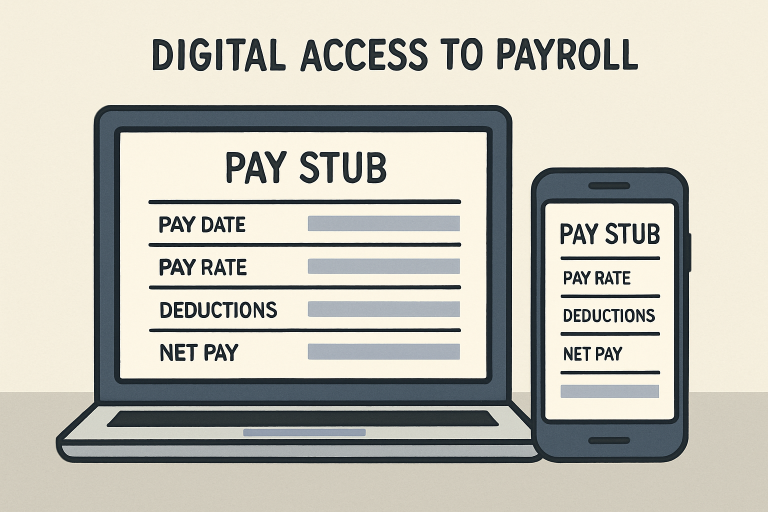
Employee expectation for instant information extends to payroll. Modern digital payroll platforms allow workers to access earning statements, deductions, bonuses, and tax details in real-time with seamless access via desktop or mobile. This fosters transparency and trust, eliminating pay-related uncertainty and reducing the need for back-and-forth with HR. For organizations with global or remote talent, such features are essential in leveling the playing field and promoting equal access to critical employment details.
Compliance and Regulatory Updates
Regulations around tax, benefits, and labor laws change frequently. Digital payroll systems have built-in compliance engines that update automatically, ensuring tax calculations and statutory deductions always reflect the latest standards for every jurisdiction. When deviations are detected or new laws roll out, systems can generate instant alerts, allowing HR and finance teams to resolve issues before they escalate. This preventive approach not only minimizes risk but also gives peace of mind to leaders navigating a complex regulatory environment, an ongoing challenge for multistate and international employers.
Enhanced Employee Experience
Companies recognize that empowered employees are more engaged and productive. Digital payroll solutions often include self-service portals that allow staff to download pay stubs, update tax information, and view benefit summaries on demand. This autonomy reduces repetitive administrative requests and improves HR workflow, while ensuring employees always have the most current information at their fingertips.
Cost Efficiency and Time-Saving
Organizations focused on operational cost control have much to gain from automated payroll solutions. Automating up to 70% of payroll functions can reduce operational costs by more than 70%. Streamlined workflows and fewer errors translate into hard cost savings and free up HR and finance personnel to focus on value-driven projects rather than manual reconciliation. In an era where every dollar counts, this efficiency is game-changing.
Future Trends in Digital Payroll
The next frontier for digital payroll involves deeper AI and machine learning integration, hyper-personalized payroll services, and even blockchain-based solutions for improved trust and data security. Payroll platforms are expected to become even more employee-centric, supporting flexible pay models and facilitating seamless compliance in dynamic work environments. As work patterns evolve, so too will the digital tools that power payroll.
In sum, the shift to digital payroll management is revolutionizing how businesses operate and how employees interact with their work data. Streamlined, secure, and adaptable, these solutions underpin the modern workforce and will continue to shape the future of workplace management.