

Key Takeaways
- Clinical trials are essential for developing new medical treatments and ensuring their safety and effectiveness.
- Advancements in technology, such as artificial intelligence, are enhancing the efficiency and inclusivity of clinical trials.
- Despite their importance, clinical trials face challenges like funding cuts and the need for greater diversity among participants.
Clinical trials stand at the forefront of medical innovation, providing the scientific foundation upon which new therapies and treatments are approved for use. These carefully regulated studies not only inform doctors and patients about the potential benefits and risks of novel interventions but also set the standards for care that can transform patients’ lives. For anyone interested in contributing to medical progress, learning about how to participate in clinical studies can be a meaningful first step.
By involving real patients at every stage, clinical trials help answer critical questions about safety, efficacy, and quality, ensuring that therapies are both practical and safe before being introduced into mainstream healthcare. The robust data generated in these studies support regulatory decisions and drive the evolution of healthcare on a global scale.
Beyond simply ushering new drugs or devices to market, clinical trials facilitate a culture of medical inquiry. Each phase is meticulously designed to answer focused questions, starting with early studies in small groups to gauge safety, and continuing through larger tests that compare new interventions to existing standards. This transparent, evidence-driven approach builds public trust and shapes the future of medicine for all.
It’s essential to acknowledge that the rigors of clinical trials extend beyond medications alone. They encompass diagnostics, surgical techniques, behavioral therapies, and many other preventive or therapeutic approaches that impact patient care at every level of the health system. To further explore the current landscape of medical research, readers can access reliable information from reputable sources, such as the National Institutes of Health.
The Role of Clinical Trials in Medical Innovation
Clinical trials are foundational to the process of translating ground-breaking laboratory discoveries into effective real-world treatments. The journey from hypothesis to public health impact involves a series of structured phases: Phase I trials prioritize safety and dosing, while later phases, such as Phase III, focus on direct comparisons between emergent therapies and current standards of care. Only through this rigorous and phased approach can new treatments achieve regulatory approval and ultimately benefit patients.
Technological Advancements Enhancing Clinical Trials
Recent advances in technology have ushered in a new era of clinical research. The adoption of digital health records, wearable medical devices, and artificial intelligence (AI) has revolutionized the conduct of trials. AI, in particular, enables researchers to manage and analyze vast datasets at speeds previously unimaginable, significantly improving the identification of potential trial participants, streamlining data collection, and facilitating more personalized research execution.
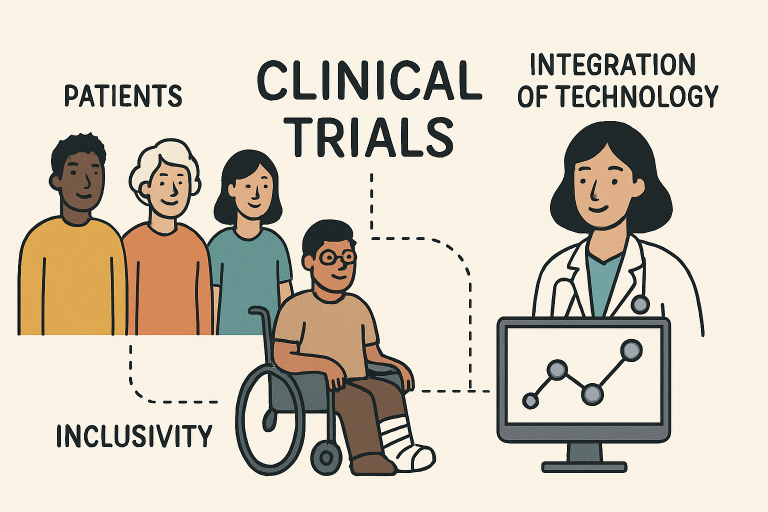
AI-driven algorithms are now being used to sift through millions of health records to pair patients with the trials best suited to their medical and genetic profiles, improving recruitment and retention. Further, remote monitoring technology reduces the need for frequent site visits, making participation less burdensome and broadening accessibility. According to STAT News, these methods are helping ensure more diverse and representative trial populations.
Challenges Facing Clinical Trials
Despite significant progress, clinical research continues to face pressing challenges. Funding instability, particularly in the wake of economic downturns, has led to the disruption and delay of numerous studies, sometimes impacting tens of thousands of participants. Additionally, the ongoing lack of diversity among trial populations impedes the development of therapies that work for everyone, since results may not translate across different age groups, races, or genetic backgrounds.
Building trust and maintaining broad participation is vital, as interrupted studies not only set back scientific progress but also erode public confidence in the research process. Researchers and advocacy groups continually work to improve access and transparency, ensuring that clinical trials remain robust and impactful.
Innovations in Clinical Trial Design
To address these challenges, the industry is increasingly adopting innovative models, such as decentralized clinical trials. This approach enables participants to contribute to research without traveling to centralized locations, thereby reducing geographic barriers and making participation feasible for those who are unable or unwilling to attend in person. Platforms developed by technology companies now offer fully remote data collection and monitoring, which both accelerate timelines and make clinical trials more equitable and inclusive.
Ethical Considerations in Clinical Trials
Upholding ethics is central to clinical research. Meaningful informed consent, rigid participant confidentiality, and equitable access are non-negotiable pillars of responsible trials. A recent review found that only 24% of medicines tested in clinical trials are authorized for use in the countries where research takes place, highlighting the need for a fairer global distribution of medical advances. Addressing these disparities is crucial for maintaining public trust and ensuring all populations benefit from innovation.
The Future of Clinical Trials
The outlook for clinical research is fundamentally optimistic. With AI and machine learning automating everything from patient screening to adverse event detection, the efficiency and speed of trials are expected to climb. In parallel, prioritizing diversity and decentralization will help clinical research reflect and serve the full spectrum of patient needs. The industry’s focus on ethical, inclusive trials ensures that progress is shared, transparent, and globally beneficial.
Conclusion
Clinical trials are pivotal to the journey from innovative scientific discovery to new standards of care. While challenges remain, technological advancements and a continued emphasis on ethical conduct are paving the way for swifter, more inclusive, and more effective studies. A commitment to evolving trial design and maintaining public trust ensures that clinical research will continue to drive medical breakthroughs, improve health outcomes, and provide hope for patients worldwide.