

Table of Contents
- Importance of Casters in Material Handling
- Types of Casters and Their Applications
- Advancements in Caster Technology
- Ergonomic Considerations and Safety
- Common Mistakes in Caster Selection
- Impact of Casters on Operational Efficiency
- Future Trends in Caster Design
- Conclusion
In today’s fast-paced industrial environments, the need to move materials efficiently and safely cannot be overstated. Casters and wheels are at the heart of this mobility, serving as the essential technology that turns static objects into dynamically movable assets. Whether supporting heavy machinery on factory floors or facilitating patient transfers in healthcare, their design and application shape the productivity, safety, and cost-effectiveness of operations. If you’re searching for a reliable solution to streamline movement in industrial settings, industrial steel caster wheels are a cornerstone for durability and versatility in challenging environments.
The right caster system can make a dramatic difference in workflow, reducing the manual labor required to transport goods and helping minimize the risk of workplace injuries. With evolving demands across sectors like warehousing, automotive, and healthcare, understanding the critical role of casters and wheels is more important than ever. For facility managers and engineers, these components offer not just movement but an opportunity to rethink material handling for greater efficiency and safety.
Importance of Casters in Material Handling
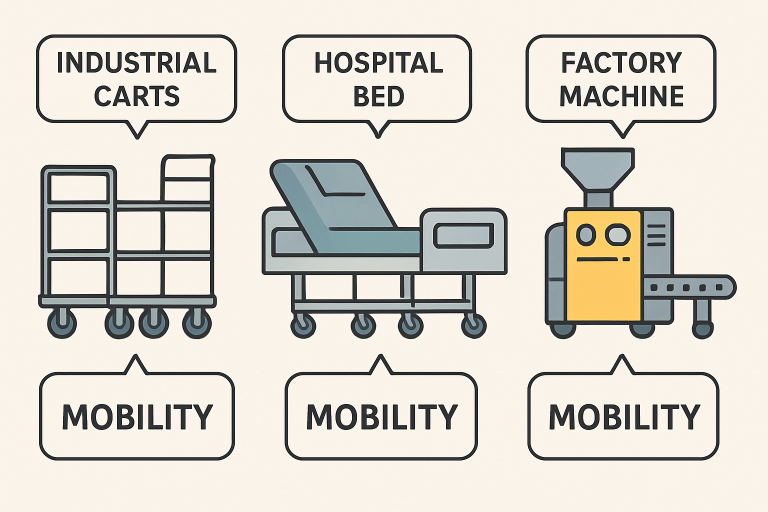
Casters play a pivotal role in material handling, enabling the movement of goods, tools, and equipment with minimal effort. Their integration into equipment such as industrial carts, stock picking trolleys, and even medical beds provides unparalleled flexibility and safety for operators. Casters reduce friction between the load and the floor, allowing fewer workers to handle larger, heavier items while reducing fatigue and injury risk.
Industries that depend heavily on time-sensitive logistics rely on casters to maintain tight schedules and adapt to ever-changing floor layouts. Quick, dependable movement of goods not only streamlines workflows but also enhances the responsiveness required in dynamic manufacturing environments.
Types of Casters and Their Applications
Selecting the appropriate caster type is essential to meeting both operational and safety needs. Each design offers unique advantages, depending on the intended use:
- Swivel Casters: Capable of 360-degree rotation, these are ideal for applications that require easy maneuvering, such as warehouse picking carts or hospital beds navigating confined corridors.
- Rigid Casters: These fixed-direction casters provide excellent stability and are best for straight-line movement, such as guiding dollies down long factory aisles.
- Locking Casters: With integrated brakes, these are critical for environments where stationary stability is as important as mobility, preventing accidental movement during loading or precise tasks.
Each caster type is suited to different floor conditions, load capacities, and maneuverability requirements, making proper selection vital for equipment safety and longevity.
Advancements in Caster Technology
Emerging technologies are continuously shaping the world of material handling. In recent years, heavy-duty casters capable of supporting loads well over 100 tons have become commercially available, opening new possibilities for industries that manage extremely heavy or sensitive equipment. Innovative wheel materials, enhanced bearing systems, and corrosion-resistant coatings now offer longevity, smoother operation, and lower maintenance costs in nearly any environment.
Ergonomic Considerations and Safety
Reducing the physical strain on workers is a key benefit of modern caster systems. Ergonomically designed casters feature sealed bearings and maintenance-free designs to minimize rolling resistance, making it easier and safer to initiate and sustain movement. This translates directly into fewer musculoskeletal injuries and improved morale, especially in facilities where manual moving of heavy carts is routine.
Common Mistakes in Caster Selection
Many businesses inadvertently shorten the lifespan of casters and compromise safety by overlooking critical factors in the selection process. Common errors include selecting wheels with inappropriate load capacities, failing to account for floor conditions (such as debris, inclines, or moisture), and neglecting the operational environment’s temperature extremes. Over time, these oversights can lead to excessive wear, frequent replacements, and even injury, underscoring the need for a thorough assessment before purchase.
Casters on Operational Efficiency
Well-chosen caster systems can have a transformative effect on workplace efficiency. By enabling quicker, smoother movement of goods and protecting valuable assets during transit, high-quality casters can reduce downtime, minimize product damage, and deliver significant long-term cost savings. Companies looking to optimize their operations may also consider operational efficiency strategies, which often go hand in hand with smart equipment choices, such as casters. Businesses that invest in appropriate casters often report improved workflow, reduced labor requirements, and decreased costly floor and load damage.
Future Trends in Caster Design
Modern material handling is quickly moving toward smarter, more predictive systems. The integration of IoT (Internet of Things) sensors in casters now enables real-time tracking of equipment location and load weight, and can trigger predictive maintenance alerts to prevent unexpected failures. This technology not only increases reliability but also optimizes maintenance schedules and asset utilization, helping organizations stay competitive in a rapidly evolving market.
Conclusion
Casters and wheels are more than mere accessories—they are essential to modern material handling, influencing safety, workflow efficiency, and an organization’s ability to adapt to new challenges. By understanding their roles, leveraging technological advancements, and carefully selecting the right components for each application, operations managers and engineers can unlock better performance and safer workplaces for all.
