

Table of Contents
- Introduction
- Heat Pump Water Heaters
- Tankless Water Heaters
- Smart Water Heater Controls
- Solar Water Heating Systems
- Recirculation Pumps
- Insulated Water Tanks and Pipes
- Regulatory Changes and Incentives
- Conclusion
As energy efficiency becomes a central focus for both homeowners and businesses, the water heater industry continues to introduce new technologies and installation practices. Whether you are building a new home or considering an upgrade, staying informed on these trends can help you make the best decision for long-term savings and performance. For those ready to take the next step, you can book water heater installation and start taking advantage of the latest advancements right away.
By understanding what is shaping the industry, you not only boost the comfort of your space but also contribute to a more sustainable future. The trends covered here are driven by technological improvements, stricter efficiency regulations, and consumer demand for smart, eco-friendly solutions.
Whether you are interested in lowering your energy bill, reducing your environmental footprint, or simply ensuring your hot water never runs out, today’s innovations promise better performance across the board. From integrated smart controls to the rise of heat pump technology, the landscape is quickly moving away from outdated, inefficient systems.
Heat Pump Water Heaters
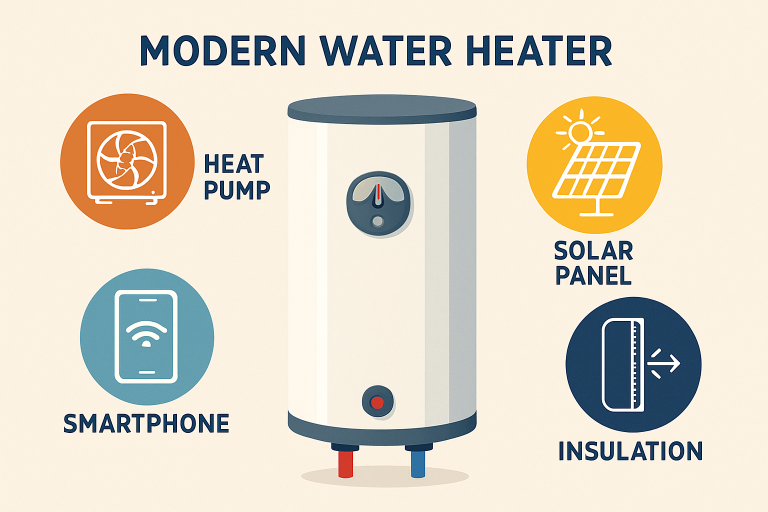
Heat pump water heaters (HPWHs) are increasingly being adopted due to their superior energy efficiency. Instead of generating heat directly, these systems extract warmth from the surrounding air, resulting in much lower electricity consumption. Municipal incentive programs highlight the push for these advanced units. For example, San Francisco residents can receive up to $1,200 in bill credits by upgrading to heat pump technology, a move supported by the city’s climate and safety goals.
This shift reflects a broader trend toward electrification and decarbonization in both new builds and retrofits. As infrastructure to support HPWHs expands, even homes in colder climates can now seamlessly integrate these units. HPWHs can be two to three times more energy-efficient than conventional electric water heaters, making them a prime choice for long-term savings.
Tankless Water Heaters
Tankless, or on-demand, water heaters continue to grow in popularity due to their ability to provide hot water only when needed. This design eliminates the costly standby energy losses associated with storing hot water in a tank. Tankless units are valued for their compact installation, helping households with restricted space maximize utility areas. Additionally, these units tend to have longer lifespans compared to traditional storage heaters and ensure families never run short during peak demand.
The flexibility of tankless systems makes them suitable for households with fluctuating water needs or for larger homes or multistory buildings that require multiple units. According to Consumer Reports, tankless water heaters can be 22% more efficient for homes that use moderate amounts of hot water daily, solidifying their reputation as a smart investment for energy-savvy property owners.
Smart Water Heater Controls
Smart water heater controls are revolutionizing the way homeowners interact with their water heating systems. These controls leverage Wi-Fi connectivity and mobile apps, enabling users to adjust water heating schedules, track energy use, and receive timely maintenance notifications remotely. Smart integration helps optimize energy consumption and minimizes unnecessary usage, effectively reducing utility expenses while improving user convenience.
The integration with voice assistants and home automation platforms is another emerging feature, making water use scheduling and control as simple as issuing a voice command or tapping a smartphone. According to industry reports, the use of smart thermostats and controls can lead to substantial cost savings and reduce the environmental impact for homes and businesses willing to embrace these advanced technologies.
Solar Water Heating Systems
Solar water heating systems are gaining traction among environmentally conscious consumers who want to harness renewable energy and reduce utility bills. By preheating water with solar collectors, these systems lower reliance on electric or gas-powered heaters, significantly cutting operating costs over time. With federal and local incentives in place, integrating solar heating technologies into new and existing water heater systems is more achievable and cost-effective than ever.
The benefits extend beyond cost savings. Solar water heating dramatically lowers greenhouse gas emissions, aligning with global sustainability targets. As more regions introduce rebates and tax credits for solar installations, homeowners and businesses are increasingly considering combined solar-thermal and electric or gas heating systems for a hybrid solution that maximizes efficiency year-round.
Recirculation Pumps
Recirculation pumps are transforming hot water delivery by ensuring instant hot water at every tap, even at distant locations. These systems constantly circulate heated water through the plumbing, so users do not have to run the tap and waste water while it heats. When equipped with smart controls or timers, the pumps provide the added benefit of on-demand heating only during peak hours, maximizing resource and energy conservation.
These systems are especially valuable in larger residences or commercial facilities where long pipe runs can lead to significant water waste and delays. By implementing recirculation technology, homeowners significantly improve comfort and efficiency while supporting water-conservation initiatives promoted by cities and environmental groups.
Insulated Water Tanks and Pipes
Adding insulation to water tanks and pipes is a straightforward yet impactful way to boost water heater efficiency. Insulation helps reduce heat loss, leading to fewer heating cycles. This translates directly into lower operating costs and a longer lifespan for the water heating system as a whole.
This upgrade is particularly important in colder regions, where uninsulated pipes and tanks can lose significant heat. Homeowners are encouraged to combine insulation improvements with other efficiency measures to maximize savings. Industry experts agree that this low-cost solution is among the most effective for both new installations and existing systems, often paying for itself through reduced energy bills within just a few years.
Regulatory Changes and Incentives
In 2026, new federal efficiency standards will drive further innovation and adoption of high-efficiency water heating technologies. The U.S. Department of Energy has announced updated regulations requiring commercial and residential water heaters to meet stricter energy performance benchmarks, with non-condensing gas models gradually being phased out. This move pressures manufacturers and installers to prioritize environmentally friendly, high-performance systems.
Homeowners and businesses can benefit from government tax credits, rebates, and other incentives that help lower the up-front costs of efficient water heaters. Staying current with these regulatory changes ensures consumers take full advantage of incentive programs while making choices that align with future industry standards. As more regions continue to adopt similar standards, energy-efficient water heater installation will increasingly become the norm rather than the exception.
Conclusion
Innovative water heater installation practices and efficient technologies are reshaping the industry in 2026. By keeping up with trends such as heat pump systems, tankless units, smart controls, and solar integration, homeowners and businesses can improve energy savings, comfort, and environmental sustainability. Proactive decisions today ensure reliable, efficient hot water for years to come, while supporting the shift toward a greener, more responsible future.
