

Key Takeaways
- Advanced safety gear utilizes technologies such as smart sensors and AI-powered monitoring for proactive risk management.
- Emerging products such as smart helmets and exoskeletons dramatically reduce injury and strain for infrastructure workers.
- Smart wearables are creating real-time, continuous protection across large-scale job sites.
- AI-driven systems help predict hazards and enable timely intervention, enhancing both safety and operational efficiency.
Table of Contents
- Smart Helmets with Integrated Sensors
- Exoskeletons for Physical Support
- Smart Wearables for Real-Time Monitoring
- AI-Powered Safety Monitoring
- Impact on Workplace Safety
- Challenges and Considerations
- Future Outlook
Ensuring the safety of infrastructure workers remains an ongoing priority, particularly as projects become more complex and environments become increasingly hazardous. Thanks to rapid technological advancements, modern safety gear now incorporates sophisticated features that help protect workers and enable companies to create safer job sites. For those looking to stay ahead of the curve in worker safety, visit https://divergentalliance.com, which provides a resourceful look at cutting-edge protective solutions.
From real-time monitoring devices to responsive AI-driven alerts, these innovations create a multi-layered safety net. By combining innovative equipment and actionable data, companies can mitigate risks, prevent accidents, and build a more resilient workforce. Embracing these enhancements isn’t just a matter of compliance—it’s a strategic investment in worker well-being and productivity.
Smart Helmets with Integrated Sensors
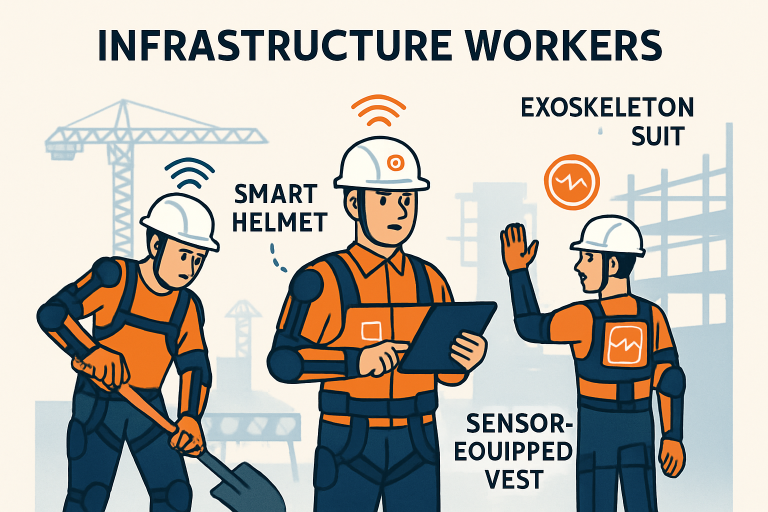
The transformation of the traditional hard hat into smart helmets marks a milestone in the personal protective equipment (PPE) market. Embedded sensors track vital environmental parameters, including temperature, air quality, and worker proximity to hazardous zones or operating machinery. Immediate alerts—delivered via audio, visual, or haptic feedback—help prevent accidents caused by heat stress, air contamination, or equipment mishaps. Higher-end models even integrate augmented reality (AR) displays, overlaying blueprints, hazard zones, and navigation aids directly onto the worker’s field of view, thus minimizing errors and boosting productivity.
Exoskeletons for Physical Support
Repetitive lifting and strenuous activities account for a significant share of workplace injuries in the construction and infrastructure sectors. Wearable exoskeletons, essentially “robotic” suits, provide mechanical assistance for back, arms, and legs, allowing workers to lift and carry heavy objects with less physical exertion. These tools are changing the landscape of manual labor by reducing fatigue, preventing musculoskeletal injuries, and enabling workers of all ages to operate with greater safety and comfort. Exoskeleton adoption is supported by recent studies showing improved ergonomics and fewer lost workdays.
Smart Wearables for Real-Time Monitoring
Beyond helmets and exoskeletons, a range of smart wearables is providing holistic, real-time safety coverage. Vests and wristbands equipped with advanced sensors can continuously monitor vital signs, including heart rate, hydration levels, and core body temperature. Some wearables monitor ambient conditions, detecting dangerous gases like carbon monoxide or hydrogen sulfide before they become lethal. These systems generate automatic alerts to workers and supervisors, acting as an invisible safety net and delivering rapid response capabilities when emergencies arise.
The implementation of these technologies has also led to the widespread use of real-time location systems (RTLS), which track individual movements across large job sites. Employers can use this data to optimize workflows, ensure workers haven’t entered restricted areas, and respond swiftly to emergencies. For more details on the industry implications of wearables, consider recent coverage by Forbes Tech Council.
AI-Powered Safety Monitoring
Artificial intelligence has emerged as a foundational tool for modern safety gear, analyzing real-time data streams to detect patterns and identify emerging risks. With AI, connected PPE systems can not only send immediate alerts but also provide predictive insights based on worker fatigue, weather fluctuations, or aggregate exposure to hazardous materials. This proactive approach empowers supervisors to take preventive action before incidents occur, making the job site environment safer and more responsive to change.
Impact on Workplace Safety
The measurable benefits of advanced safety gear are plainly evident in workplace safety statistics. Companies that adopt connected PPE and real-time monitoring have reported significant declines in accident and injury rates by as much as 35%, according to industry-wide studies. This leap in safety outcomes underscores the critical importance of investing in next-generation gear and integrating data-driven practices with traditional safety protocols.
Challenges and Considerations
While innovative safety gear redefines worker protection, its adoption isn’t without challenges. The initial investment for smart helmets, exoskeletons, and wearable sensors can be considerable, creating budget pressure for smaller contractors or municipalities. Additionally, introducing new technology means additional training and adjustment periods for staff. Data privacy also emerges as a key concern, with vast amounts of personal and site data being collected and analyzed, necessitating robust security and ethical frameworks.
Future Outlook
As technologies mature, the future of infrastructure worker safety looks increasingly bright. Industry analysts predict the widespread adoption of AI-powered safety solutions and continuous innovation in wearable technology. As regulators and companies prioritize worker protection, we can expect more intelligent and adaptive safety gear to become the industry standard, further reducing accidents and creating safer, more attractive jobs in construction and infrastructure.
The evolution of safety gear reflects how prioritizing worker well-being not only saves lives but also enhances efficiency and operational success. By investing in smart helmets, exoskeletons, and comprehensive wearable systems, the industry is establishing a blueprint for a safer, more innovative workplace for generations to come.
