

Introduction

Imagine our planet as a giant house. We constantly use its resources – wood, metals, and water – to build and create the world around us. But like any home, we also generate a lot of waste. This waste is growing fast. In 2010, we generated about 1300 million tons globally. By 2025, this could jump to 2200 million tons. This trend puts huge pressure on our environment and limited resources.
How do we manage this challenge and build a better future? The answer lies in sustainable infrastructure and advanced recycling. These approaches help us shift from a ‘take-make-dispose’ model to a circular economy. They maximize resource use and minimize environmental harm. This includes transforming waste materials into valuable assets, such as using recycled content for Recycling for sustainable surfaces.
We will explore how these vital systems protect our planet. We will see how they conserve resources and fight climate change. We will also look at innovative uses for recycled materials, like in road construction. And we will discuss the challenges we face in making these practices widespread.
The Role of Sustainable Infrastructure and Recycling in Urban Development
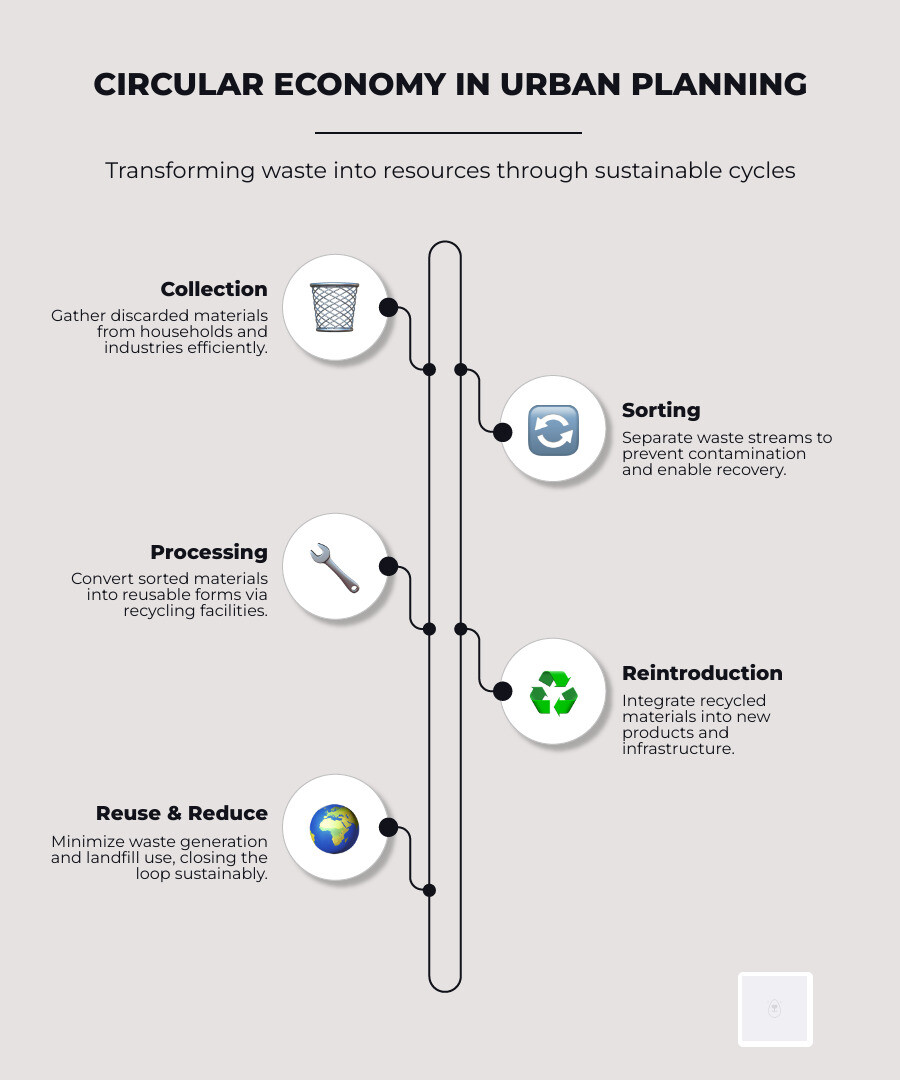
Recycling infrastructure encompasses the entire network of facilities, technologies, and systems designed to collect, process, and reintroduce discarded materials back into the economy. This includes everything from curbside collection programs and drop-off centers in communities like Charlotte and Raleigh, to large-scale material recovery facilities (MRFs) and specialized processing plants. This infrastructure is not merely about waste management; it is a fundamental pillar of sustainability and a critical tool for pollution reduction.
Without robust recycling infrastructure, the vast majority of our waste would end up in landfills. Landfills are not just unsightly; they are significant sources of pollution. As organic waste decomposes in these sites, it releases methane, a potent greenhouse gas that contributes significantly to climate change. By diverting waste from landfills, recycling infrastructure directly reduces these harmful emissions, playing a crucial role in our global efforts to mitigate climate change.
Beyond pollution, recycling infrastructure is essential for fostering a sustainable society. It enables us to conserve finite natural resources by reducing the demand for virgin materials. For instance, creating a new aluminum can from raw bauxite ore requires substantial energy and generates considerable pollution. However, recycling an aluminum can saves up to 95% of the energy needed for new production. Similarly, recycling steel saves approximately 60% of the energy, and paper recycling saves about 40% compared to using virgin materials. These energy savings translate into reduced greenhouse gas emissions and a lighter environmental footprint.
The development of this infrastructure is a continuous process, demanding collaboration across local municipal zones and regional projects. For instance, cities like Tucson are developing “Zero Waste Roadmaps” to integrate advanced recycling and waste diversion strategies, moving towards a more circular urban metabolism. This holistic approach is crucial for achieving true sustainability in our urban environments.
The Importance of Proper Sorting and Separation
The efficiency and effectiveness of recycling processes hinge significantly on proper sorting and separation of waste at the source. When different types of waste are mixed, it leads to contamination, making materials harder, or sometimes impossible, to recycle. This phenomenon, often termed “wish-cycling,” where individuals toss items into recycling bins hoping they are recyclable, can severely compromise entire batches of otherwise valuable materials.
Consider the analogy of baking a cake: if all your ingredients were mixed together in one bowl before you even started, it would be impossible to create a delicious, well-structured cake. The same principle applies to recycling. When waste streams are contaminated, it reduces the quality and value of the recyclables, increases processing costs, and can even lead to materials being sent to landfills despite initial collection for recycling.
Proper sorting, whether through multi-stream collection or advanced single-stream processing, ensures that materials like paper, plastics, glass, and metals retain their integrity. This enables them to be efficiently processed into high-quality secondary raw materials. For example, clean plastic streams can be transformed into new products, whereas contaminated plastics might only be suitable for lower-grade applications or simply discarded. This precision in sorting extends to specialized applications, such as the components used in advanced Vizona sustainable recyclable lighting systems, where material purity is paramount for both performance and future recyclability. Investing in public education and accessible sorting systems is therefore a critical step in maximizing recycling’s potential.
Mitigating Environmental Impact through Material Recovery
Recycling infrastructure serves as a powerful mechanism for mitigating a wide array of environmental issues, extending far beyond simple waste reduction. By recovering and reusing materials, we directly address critical global challenges such as resource depletion, ecosystem damage, biodiversity loss, and climate change.
Intensive exploitation of natural resources accounts for approximately 90% of global biodiversity loss. Every time we extract virgin materials—whether it’s mining for metals, logging forests for paper, or drilling for oil to produce plastics—we disrupt ecosystems, destroy habitats, and contribute to the decline of countless species. Recycling reduces this pressure by providing alternative sources of raw materials, effectively “mining” our waste streams instead of pristine natural environments. This shift helps preserve vital ecosystems and the rich biodiversity they support.
Furthermore, material recovery plays a crucial role in combating climate change. As previously noted, recycling significantly reduces the energy required for manufacturing. For instance, recycling aluminum saves up to 95% of the energy compared to producing it from virgin ore, while steel recycling saves around 60% and paper recycling approximately 40%. These energy savings translate directly into a reduction in greenhouse gas emissions. Beyond manufacturing, recycling diverts waste from landfills, which are major emitters of methane, a potent greenhouse gas. This dual impact—reducing emissions from production and preventing emissions from decomposition—makes recycling a cornerstone of climate change mitigation strategies.
The economic viability of these efforts is also gaining traction, with a growing understanding that investing in recycling and material recovery infrastructure is not just an environmental imperative but also an economic opportunity, creating jobs and fostering innovation in green industries.
Engineering Sustainable Infrastructure and Recycling through Geocells

The innovative use of recycled materials in sustainable infrastructure projects is transforming how we build and maintain our communities. One compelling example is the application of waste tires in the creation of geocells for road construction and other civil engineering applications. Geocells are three-dimensional cellular confinement systems that enhance the performance of granular infill materials by providing lateral confinement and increasing stiffness. Traditionally made from virgin polymers, the shift to tire-derived geocells offers a powerful solution to a pervasive waste problem.
The sheer volume of discarded tires is staggering, with generation expected to reach 2.67 billion units by 2027. These waste tires pose significant environmental challenges, including occupying vast landfill space, presenting fire hazards, and contributing to ecosystem contamination. Repurposing them into geocells transforms a liability into a valuable resource, offering a sustainable alternative for pavement engineering and ground stabilization.
Research, such as that by Salehi et al. (2021), highlights the environmental and economic benefits of using recycled materials in pavement construction. Tire-derived geocells provide superior confinement effects, reducing deformation and increasing the strength of the soil compared to traditional geosynthetics. This makes them ideal for reinforcing subgrades in roadways, vehicle platforms, and other load-bearing structures, particularly in areas with challenging soil conditions like those found in parts of Charlotte or Tucson. This approach not only diverts waste from landfills but also creates durable, high-performance infrastructure. Our commitment to Eco-friendly surface solutions extends to exploring and implementing such innovative uses of recycled materials.
From Waste Tires to High-Performance Roadways
The journey from discarded tires to high-performance roadways is a testament to the potential of innovative recycling. Once collected, waste tires undergo processing, typically involving shredding or cutting, to create suitable segments for geocell construction. These segments are then assembled into cellular structures, which are laid over a prepared subgrade and filled with granular materials, often locally sourced to minimize transportation emissions.
A compelling real-world case study involved the construction of a 17m x 4m vehicle platform for school buses. This project utilized 584 recycled tires, which were cut, flipped, and joined to form geocells, then infilled with granular material. The platform demonstrated exceptional stability on silty sand subgrade, effectively supporting heavy vehicle loads. Post-construction, the platform received an impressive 96.6% approval rating from teachers, highlighting its practical success and acceptance.
Academic studies further corroborate these findings. Research by Yoon et al. (2008) has shown the significant geotechnical performance benefits of using waste tires for soil reinforcement in chamber tests, demonstrating their ability to improve load-bearing capacity and reduce settlement. The use of tire-derived geocells can dramatically improve the California Bearing Ratio (CBR) of subgrade materials. For instance, a subgrade with a CBR of 2% can be significantly enhanced by a fill material with an 86% CBR when confined within geocells, leading to a much more stable and durable pavement structure. This innovative application represents a tangible step towards a circular economy in infrastructure development.
Public Perception and Educational Influence on Adoption
The success of sustainable infrastructure projects, particularly those employing unconventional recycled materials, is not solely dependent on engineering prowess; it also heavily relies on public perception and education. Without community buy-in, even the most environmentally sound innovations can face resistance.
An insightful case study conducted in an educational institution demonstrated the profound impact of awareness campaigns. Initially, a survey revealed that 84.16% of respondents accurately defined sustainability as the balanced and responsible use of resources, indicating a foundational understanding. However, when presented with information about the benefits of a tire-derived geocell platform, perceptions shifted dramatically. A remarkable 66.3% of participants reported improved perceptions of recycling, with 27.7% stating their perceptions were “much improved.” Furthermore, an overwhelming 85.64% of respondents would recommend the use of recycled tire alternatives for future infrastructure projects. This positive shift underscores the power of education in fostering acceptance and advocating for sustainable practices.
This study, as highlighted by Hicks & Nergard (2023), suggests that educational settings are ideal environments to demonstrate sustainable infrastructure solutions. By engaging students, faculty, and the broader community in understanding the “why” and “how” of using recycled materials, we can cultivate a culture that embraces circularity. These initiatives not only build support for specific projects but also instill long-term values that encourage the adoption of sustainable practices in everyday life, from sorting household waste to advocating for green urban planning in cities like Tucson and Charlotte.
Technological Innovations in Sustainable Infrastructure and Recycling
Technological innovations are rapidly transforming the landscape of sustainable infrastructure and recycling, pushing the boundaries of what’s possible and enabling a more integrated, circular approach. These advancements, coupled with supportive policy, effective governance, and strategic economic incentives, are critical for enhancing recycling infrastructure and driving broader environmental benefits.
The integration of recycling infrastructure with circular economy principles, green FinTech, and sustainable development holds immense promise for long-term environmental gains, particularly in biodiversity conservation. As noted, intensive exploitation of natural resources accounts for approximately 90% of global biodiversity loss, with rapid industrialization contributing to 50% of global biodiversity decline. A holistic approach, as explored by Khan et al. (2025), demonstrates that while the circular economy itself can have complex impacts, green FinTech and sustainable infrastructure significantly boost biodiversity conservation.
Smart city solutions are at the forefront of this transformation. Advanced sensors can monitor waste bins, optimizing collection routes and reducing fuel consumption. Artificial intelligence and robotics are revolutionizing material recovery facilities, improving sorting accuracy and efficiency. Digital platforms facilitate the tracking of materials throughout their lifecycle, creating transparent supply chains and enabling better reuse and recycling decisions. These innovations are crucial for realizing the future of recycling, where waste is seen as a valuable resource. Furthermore, innovative solutions like Circular lighting systems exemplify how design and technology can extend product lifecycles and facilitate material recovery, moving beyond traditional linear models.
Policy, Governance, and Economic Incentives
The transition to a truly sustainable and circular economy is impossible without robust policy frameworks, effective governance, and well-designed economic incentives. Governments at all levels play a pivotal role in setting targets, enacting regulations, and fostering an environment where sustainable practices thrive.
Policy interventions can include mandating minimum recycled content in new products, implementing extended producer responsibility (EPR) schemes that hold manufacturers accountable for their products’ end-of-life, and providing tax breaks or subsidies for businesses that invest in recycling infrastructure or use recycled materials. For example, some cities are exploring regulations that require a certain percentage of construction materials to be recycled content, stimulating demand for secondary materials.
Economic incentives, such as deposit-refund systems for beverage containers, have proven highly effective in increasing collection rates and reducing litter. Carbon pricing mechanisms can also make virgin materials more expensive, making recycled alternatives more competitive. These financial signals encourage businesses to innovate and adopt more sustainable practices.
Effective governance ensures that these policies are implemented fairly and transparently, addressing potential environmental justice concerns where waste facilities have historically been disproportionately placed in low-income communities. By integrating these elements, we can create a powerful synergy that accelerates the adoption of circular economy principles and leads to broader biodiversity conservation and long-term environmental benefits across Europe and beyond.
Energy Efficiency in Recycled Material Manufacturing
One of the most compelling arguments for robust recycling infrastructure is the dramatic energy savings achieved in manufacturing products from recycled materials compared to virgin resources. This energy efficiency directly translates into reduced greenhouse gas emissions and a smaller carbon footprint for industries.
Consider the following energy savings:
Material Type Energy Saved (vs. Virgin Materials) Aluminum Up to 95% Steel Around 60% Paper Approximately 40% These figures, supported by research such as that by Araujo-Morera et al. (2021) on sustainable mobility and the circular economy, underscore the profound environmental advantages of recycling. Producing new aluminum from bauxite ore is an incredibly energy-intensive process, involving mining, refining, and smelting at high temperatures. Recycling aluminum cans bypasses these initial stages, requiring only melting and reforming, thus saving nearly all the energy. Similarly, recycling steel from scrap reduces the need for iron ore mining and the energy-intensive blast furnace process. For paper, recycling reduces the demand for virgin timber, as well as the energy and water used in pulping and bleaching.
These energy efficiencies are not just theoretical; they represent real-world reductions in fossil fuel consumption and associated emissions. By prioritizing the collection, processing, and reintroduction of these materials into the manufacturing cycle, we effectively decouple economic growth from resource depletion and environmental degradation, paving the way for a more sustainable industrial future.
Challenges and Future Directions for Material Recovery
Despite the immense benefits, the path to a fully circular economy through advanced recycling infrastructure is not without its challenges. Issues such as contamination, economic viability, and environmental justice concerns often impede progress.
Contamination remains a significant hurdle. “Wish-cycling” and inadequate public education lead to non-recyclable items entering the recycling stream, increasing processing costs and reducing the quality of recovered materials. This often results in materials being downgraded or sent to landfills, undermining the very purpose of recycling.
Economic viability is another major factor. The cost of collecting, sorting, and processing recycled materials can sometimes exceed the market value of the end product, especially when virgin materials are cheap. This economic imbalance can disincentivize investment in recycling infrastructure and make it difficult for recycling businesses to compete.
Furthermore, environmental justice concerns are critical. Historically, waste management facilities, including landfills and recycling plants, have been disproportionately located in low-income communities and communities of color. This raises ethical questions about equitable access to clean environments and the fair distribution of environmental burdens. Addressing these issues requires intentional policy design and community engagement.
The sheer volume of waste generated globally also presents a formidable challenge. While we strive for circularity, the world generated approximately 1300 million tons of waste in 2010, projected to increase to 2200 million tons by 2025. In the US alone, 600 million tons of construction and demolition (C&D) waste are generated annually, with 90% coming from demolition activities. This massive waste stream, as highlighted in a review by Iacovidou & Purnell (2016) on mining physical infrastructure, underscores the urgent need for more effective material recovery strategies.
Overcoming Barriers in Structural Component Reuse
In the construction sector, overcoming barriers to structural component reuse is paramount for achieving true circularity. Traditional demolition methods often pulverize buildings, rendering most materials unusable for anything other than low-grade aggregate fill. Deconstruction, conversely, involves carefully dismantling structures to salvage components for direct reuse or high-value recycling. This approach preserves the embodied energy and carbon within materials far more effectively than merely recycling them. For instance, reusing steel components can save significantly more energy than recycling them, which itself saves 60% over virgin production.
However, several barriers hinder the widespread adoption of deconstruction and component reuse. These include technical challenges (e.g., lack of standardized component dimensions, difficulty in assessing material quality), economic disincentives (e.g., higher labor costs for deconstruction, uncertain markets for salvaged materials), and organizational complexities (e.g., lack of information on material composition, inadequate reverse logistics). As Gorgolewski (2008) points out, designing with reused building components presents unique challenges that require innovative solutions.
To overcome these, we need to foster a shift towards “Design for Deconstruction” (DfD) and “Design for Reuse” (DfR), where buildings are planned from the outset with their end-of-life in mind. This includes using modular components, reversible connections, and clear material passports. Developing robust supply loops for salvaged materials, supported by digital inventories and marketplaces, can also create economic incentives for reuse.
Integrating Smart City Solutions for Waste Management
The concept of a smart city offers a powerful framework for integrating advanced technologies to revolutionize waste management and accelerate material recovery. By leveraging digital tracking, data analytics, and interconnected systems, smart cities can optimize every stage of the waste lifecycle, from generation to reprocessing.
Currently, only 8.6% of global materials are cycled back into the economy, indicating a vast untapped potential. Smart city solutions can help close this loop. For example, IoT-enabled waste bins can communicate their fill levels, allowing for dynamic, optimized collection routes that reduce fuel consumption and operational costs. AI-powered sorting facilities can achieve higher purity rates for recycled materials, enhancing their market value and reducing contamination.
Digital tracking systems, often utilizing blockchain technology, can create “material passports” that provide detailed information about the composition, origin, and potential reuse pathways for various components. This transparency is crucial for building trust in secondary material markets and facilitating their reintroduction into manufacturing. As Szpilko et al. (2023) discuss, integrating smart city solutions for waste management is key to transitioning towards a truly circular economy.
By embracing these innovations, cities can move towards a future where waste is not simply discarded but is instead viewed as a valuable resource, contributing to resource security and a more sustainable urban environment. This integrated circular approach is essential, especially as global waste is projected to increase by 70% by 2050.
Frequently Asked Questions about Sustainable Infrastructure
What is recycling infrastructure and why is it essential?
Recycling infrastructure refers to the entire system of collection, processing, and reintegration of waste materials into new products. It is essential for sustainability because it reduces pollution (e.g., methane from landfills), conserves natural resources by lessening the need for virgin materials, saves significant energy in manufacturing (e.g., 95% for aluminum), and mitigates climate change.
How do recycled tires improve road construction?
Recycled tires, often processed into tire-derived geocells, significantly improve road construction by providing superior soil reinforcement and stability. They enhance the load-bearing capacity of subgrades, reduce deformation under heavy traffic, and divert billions of waste tires from landfills. Real-world applications, like vehicle platforms, demonstrate their durability and performance, even in challenging soil conditions.
What role does Green FinTech play in biodiversity conservation?
Green FinTech (financial technology focused on environmental outcomes) plays a crucial role in biodiversity conservation by facilitating investments in sustainable projects, promoting transparent tracking of environmental impacts, and incentivizing eco-friendly practices. By integrating with circular economy principles and sustainable infrastructure, Green FinTech can channel capital towards initiatives that reduce resource exploitation, mitigate climate change, and directly contribute to preserving ecosystems and biodiversity.
Conclusion
Our journey through sustainable infrastructure and recycling reveals a clear imperative: to shift from a linear “take-make-dispose” model to a regenerative circular economy. We’ve seen how robust recycling infrastructure is foundational, not just for managing waste, but for significantly reducing pollution, conserving precious resources, and mitigating the dire impacts of climate change. From the critical importance of proper waste sorting to the innovative use of recycled tires in high-performance roadways, every step in the recycling process contributes to a more sustainable future.
Public education and perception are powerful drivers for the adoption of these practices, demonstrating that informed communities are more likely to embrace and recommend sustainable alternatives. Furthermore, technological innovations, supported by progressive policies, effective governance, and strategic economic incentives, are paving the way for smart cities where waste is a resource, and material recovery is optimized.
The challenges of contamination, economic viability, and environmental justice are real, but they are surmountable through continued innovation, collaboration, and a commitment to circular principles. By embracing deconstruction, designing for reuse, and integrating smart city solutions, we can transform our urban environments.
The future of urban development in places like Charlotte, Raleigh, and Tucson, and indeed across the globe, hinges on our collective ability to integrate these sustainable practices. It is a call to action for policymakers, industries, and individuals to champion recycling and sustainable infrastructure. Let us work together to build a world where our planet, our giant house, remains vibrant and resourceful for generations to come.