

Table of Contents
- Understanding Managed SD-WAN
- Enhancing Network Security
- Simplifying Network Management
- Cost Efficiency and Performance
- Supporting Multicloud Environments
- Facilitating Digital Transformation
- Future Trends in SD-WAN
- Conclusion
In a world where digital transformation and cybersecurity are top priorities, organizations face rising pressure to deliver robust, adaptable network solutions that empower growth while keeping data safe. Enterprises are turning to Managed SD-WAN services as a pivotal step toward agile, secure, and future-ready networking. As IT landscapes become increasingly distributed, the ability to deploy reliable connectivity and protection across all endpoints is no longer a luxury but a necessity.
SD-WAN’s value extends beyond basic connectivity. Businesses require networks that simplify management, reduce operating expenses, and ensure seamless cloud integration. Managed SD-WAN services offer these advantages, making them integral for companies seeking innovation without compromising speed or security.
Understanding Managed SD-WAN
Managed SD-WAN provides enterprises with a solution that leverages the flexibility of SD-WAN technology and the support and expertise of a dedicated provider. This means organizations can focus on core operations while relying on external professionals to oversee and optimize their network’s health. The managed approach streamlines deployment, ensures consistent policies, and provides round-the-clock support, helping alleviate the traditional strain on IT teams.
With a managed model, companies benefit from ongoing performance monitoring, security updates, and hands-on troubleshooting, making network evolution seamless and less risky. These services are designed to scale in tandem with business needs, addressing fluctuations in bandwidth, traffic, or cloud adoption.
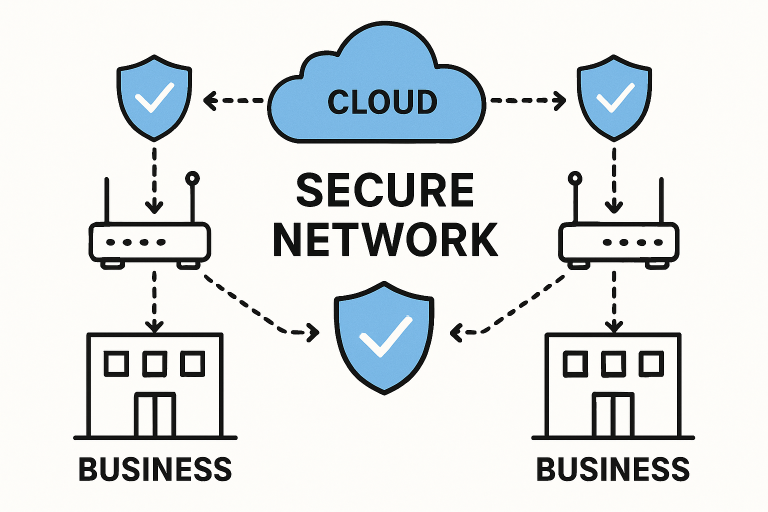
Enhancing Network Security
Cybersecurity threats are persistently evolving, requiring organizations to adopt equally dynamic defenses. Managed SD-WAN services are built to integrate advanced security measures, including Zero Trust Network Access (ZTNA), Secure Web Gateway (SWG), and encrypted traffic via VPN tunnels. The convergence of security features into a single solution strengthens visibility and control over network traffic, reducing opportunities for unauthorized access or data breaches.
Security is approached holistically, with continuous monitoring, automated threat detection, and unified policy enforcement that spans branch offices, remote employees, and cloud resources. This layered approach aligns with the latest industry guidance on secure networking, as highlighted in resources such as CSO Online’s overview of SD-WAN security evolution.
Simplifying Network Management
Most legacy networks demand significant manual effort for monitoring and troubleshooting. With managed SD-WAN, IT teams can leverage centralized dashboards that display the status of all connected sites and applications. Features such as zero-touch provisioning and automated cloud on-ramp enable new sites to come online quickly and securely, without complex configuration or specialized local expertise.
Centralized management platforms reduce administrative overhead and give organizations critical insight into usage patterns, bottlenecks, and potential failure points. Real-time analytics support proactive issue resolution and enable teams to maximize uptime and the quality of experience for end users.
Cost Efficiency and Performance
The high cost of dedicated MPLS circuits traditionally limited bandwidth and agility. Managed SD-WAN leverages broadly available public internet connections to create secure, reliable overlays at a fraction of the cost. By dynamically steering traffic based on real-time application needs, businesses can expect significant performance improvements without inflating operational expenditure.
Automated traffic prioritization means latency-sensitive applications, such as voice or video, are always routed along the best available path. This dynamic approach eliminates the common bottlenecks and inefficiencies of static routing, which often hinder productivity and user satisfaction.
Supporting Multicloud Environments
Modern enterprises rarely rely on a single cloud provider. As they distribute applications and workloads across AWS, Microsoft Azure, Google Cloud, and others, challenges related to secure, efficient interconnectivity multiply. Managed SD-WAN delivers a secure fabric that binds multicloud environments, masking complexity for IT teams and delivering consistent user experiences across all platforms.
This cloud-agnostic approach is particularly valuable as organizations pursue best-of-breed application stacks, supporting flexible deployment while ensuring all data flows remain protected and auditable. For additional insight into the rise of multicloud strategies and their impact on networking, refer to Network World’s SD-WAN for multicloud guide.
Facilitating Digital Transformation
The pace of digital change requires network infrastructure that adapts in real time to new opportunities or disruptions. Managed SD-WAN empowers organizations to swiftly respond to changing demands, whether enabling remote work, supporting Internet of Things (IoT) initiatives, or integrating newly acquired locations into the business fabric. This flexiprovidingelerates project timelines and lets teams focus on strategic growth rather than repetitive network redesigns.
By enabling seamless, secure digital initiatives, managed SD-WAN services help ensure that a resilient, future-proof foundation underpins every digital transformation effort.
Future Trends in SD-WAN
The SD-WAN landscape is evolving rapidly, fueled by emerging technologies and the relentless demands of hybrid and remote workforces. Artificial Intelligence (AI) and Machine Learning (ML) are increasingly integrated into managed SD-WAN solutions, enabling automated, swift response to changing demands, maintenance, and even more granular threat detection. These innovations promise to minimize manual intervention and free IT resources for higher-level initiatives.
Further convergence with secure access service edge (SASE) models and edge computing architectures will continue to redefine how enterprises approach distributed connectivity and security, demonstrating that managed SD-WAN is only the beginning of a broader evolution in enterprise networking.
Conclusion
Managed SD-WAN has emerged as a foundational technology for modern businesses that seek both flexibility and robust security in their network infrastructure. By centralizing and simplifying network management, these services reduce operational complexity while ensuring consistent performance across multiple sites. Integrated best-in-class security features protect sensitive data, help organizations comply with evolving regulations, and support dynamic, cloud-focused strategies. This combination allows companies to scale efficiently, respond quickly to shifting market demands, and maintain uninterrupted operations. Organizations adopting managed SD-WAN are better equipped to navigate the challenges of a rapidly evolving digital landscape, improve overall network resilience, and seize future opportunities with confidence. In essence, it is a strategic investment in long-term technological agility and business continuity.
