

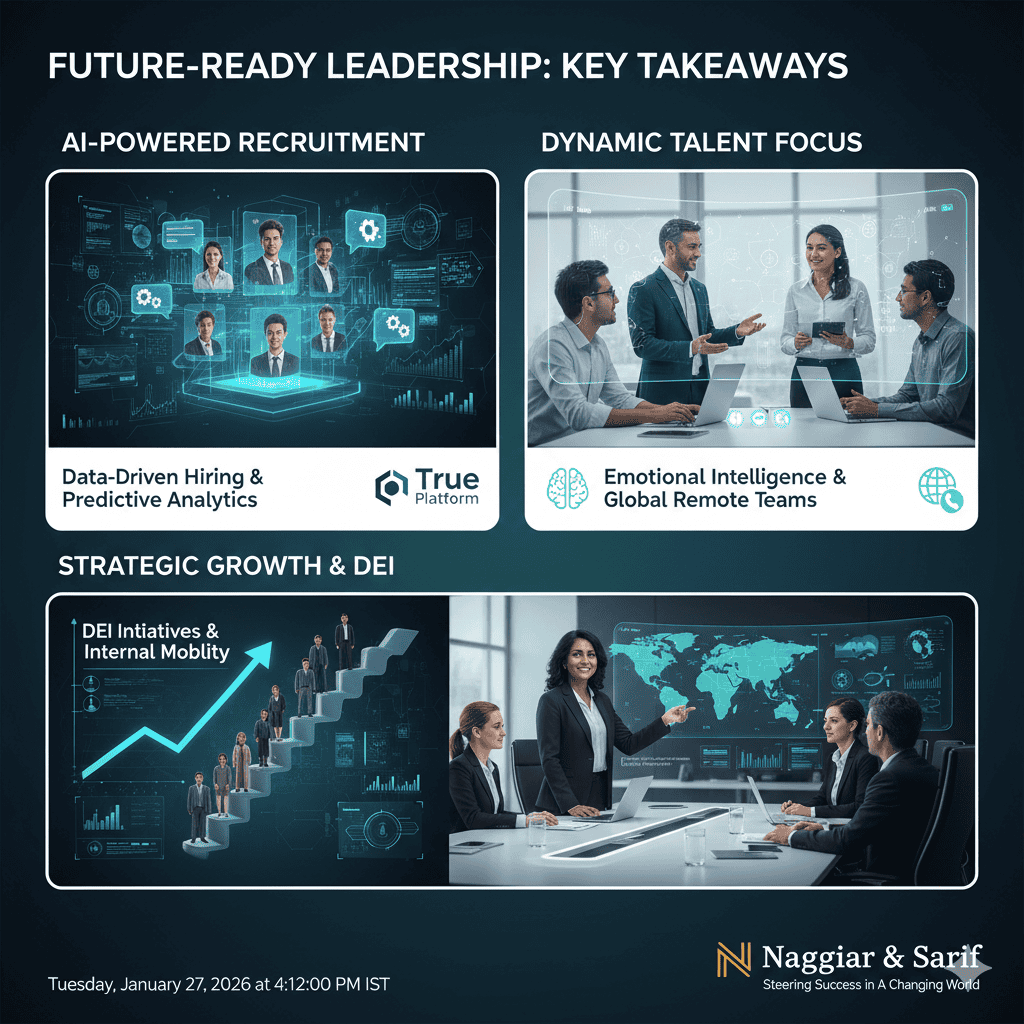
Key Takeaways
- Executive recruitment is evolving to meet the demands of rapid growth, digital transformation, and an increasingly complex business landscape.
- AI-powered and data-driven hiring tools are reshaping how organizations identify, evaluate, and secure future-ready leaders.
- Emotional intelligence, adaptability, and inclusivity are now as critical as technical expertise in executive roles.
- Remote and hybrid work models have expanded access to global leadership talent and niche expertise.
- Prioritizing DEI and internal leadership development strengthens long-term resilience, innovation, and organizational performance.
Introduction
Organizations striving for rapid expansion must rethink their leadership recruitment strategies amid an increasingly complex and unpredictable business environment. With industries being shaped at an accelerating pace by new technologies, regulatory changes, and shifting market demands, the stakes of finding the right leaders have never been higher. The priorities for hiring executives are transforming, with innovative solutions taking precedence over old-school practices that can no longer keep up with the pace of change. Technology-driven processes, blended with dynamic talent expectations, evolving work models, and societal shifts toward greater inclusion, are at the forefront of this ongoing transformation. Companies that tap into progressive methods, such as True Platform Executive Search, position themselves more competitively by identifying and securing future-ready leaders who possess the vision and skills to steer their organizations toward sustainable, long-term growth amidst uncertainty.
Modern leaders must adapt not only to the relentless demands of digital transformation but also to the nuances of managing distributed teams and cultivating inclusive, highly engaged workforces. Forward-thinking organizations understand that recruitment today is more than just filling open roles—it’s about proactively forecasting future needs, building succession pipelines, and assembling leadership teams that combine business acumen with empathy, adaptability, and resilience. These qualities are essential in ensuring organizations can pivot quickly, harness new opportunities, and remain robust in the face of challenges.
Integration of Artificial Intelligence in Recruitment
Artificial Intelligence is rapidly accelerating and optimizing the executive search process, delivering outcomes previously unattainable by human-centered recruitment methods alone. Modern AI tools can rapidly sort through hundreds or even thousands of applications, meticulously assess competencies, analyze career trajectory data, and filter candidates based on highly tailored, organization-specific criteria. This automation lets recruiters invest more energy and insight into strategic conversations and high-impact decision-making, rather than being bogged down in repetitive administrative tasks. Notably, AI can also help forecast which candidates are most likely to accept roles by leveraging predictive analytics based on current talent market trends, prior candidate behavior, and historical hiring patterns.
AI-enabled chatbots add another layer of real-time engagement by providing prompt, personalized communication with candidates, ensuring a positive, transparent experience that keeps top talent engaged throughout a lengthy hiring process. As organizations look to reduce the influence of unconscious bias in their recruitment pipelines and improve hiring outcomes, AI’s ability to consistently identify data-driven success factors unclouded by human subjectivity becomes even more salient.
Emphasis on Emotional Intelligence
Recruiting for emotional intelligence (EI) is increasingly recognized as just as vital as assessing a candidate’s technical or business skills. The next generation of leaders must foster connected, trusting, and motivated teams, bringing out the best in diverse talent and creating psychologically safe work environments. Leaders infused with high EI can better navigate the complexities of organizational change, manage interpersonal challenges, and drive cross-functional collaboration. Companies are prioritizing candidates who demonstrate authentic self-awareness, deep empathy, and the ability to manage conflict and positively influence culture constructively. To assess these qualities, hiring organizations are increasingly implementing behavioral interviews and immersive leadership simulations, both of which reveal how executives respond under pressure, listen and adapt, and motivate and inspire others, especially during periods of uncertainty or adversity.
Expanding the Talent Pool Through Remote Work
The widespread adoption of remote and hybrid work models has fundamentally transformed the parameters of executive search, enabling organizations to widen their search far beyond traditional local boundaries. With geography no longer a limitation, hiring teams can now seek out and attract candidates who bring both unique perspectives and a wealth of diverse global experience to their leadership tables. By tapping into this expanded global talent pool, companies have tremendous opportunities to build more culturally competent leadership teams, resulting in richer decision-making and more innovative solutions to complex challenges. Moreover, leaders who have thrived while managing distributed, remote teams offer proven abilities in digital communication, asynchronous collaboration, and cross-cultural management, skills that are becoming indispensable in today’s interconnected world and which further fuel growth-oriented strategies.
This global reach in executive recruiting not only enhances diversity but also accelerates access to niche expertise, allowing companies to quickly adapt to emerging business needs, new markets, and evolving industry landscapes.
Prioritizing Diversity, Equity, and Inclusion (DEI)
Diversity, Equity, and Inclusion (DEI) has moved from being a peripheral consideration to a foundational element of modern leadership recruiting. Companies now understand that diverse teams drive better business outcomes, foster breakthrough innovation, and more accurately reflect the broad range of customers and stakeholders they serve. For growth-focused organizations, actively recruiting leaders from historically underrepresented backgrounds is no longer optional—it’s a business imperative. These efforts help companies build more inclusive leadership benches and demonstrate a commitment to equity that resonates with both employees and the marketplace. As Harvard Business Review highlights, truly inclusive leadership development is essential for both organizational performance and meaningful, sustained business growth. Methodically developing inclusive pipelines also ensures diverse perspectives are represented at the strategic decision-making level, enhancing agility and competitiveness.
Leveraging Data-Driven Decision Making
Companies are increasingly turning to advanced data analytics to ensure their recruitment efforts are effective, fair, and closely aligned with broad organizational goals. Modern analytics platforms enable talent acquisition and HR teams to meticulously track recruiting metrics, evaluate post-hire candidate success rates, and anticipate future leadership needs by analyzing business growth patterns and attrition data. This evidence-based approach minimizes the influence of subjective gut-feeling decisions, creating a level playing field and increasing the likelihood of securing high-quality hires aligned with the organization’s culture and business targets. Additionally, data-driven recruitment provides invaluable insights to optimize talent acquisition strategies, benchmark success, and inform continuous process improvement, all of which are crucial for businesses seeking sustainable expansion.
Fostering Internal Talent Development
Building a future-ready leadership pipeline from within is gaining major traction as companies increasingly recognize the significant advantages of promoting existing employees to executive roles. Internally developed leaders come equipped with a deep understanding of company culture, business strategy, and customer expectations, which shortens ramp-up time and delivers immediate impact. More importantly, this internal focus boosts morale and engagement across teams, reinforcing loyalty and reducing turnover. Robust internal development programs feature targeted training initiatives, formal mentorship, and stretch assignments, all designed to accelerate high-potential employees’ readiness for senior roles. According to a recent report by The Wall Street Journal, organizations that prioritize internal leadership development consistently outperform peers in retention and demonstrate greater agility in responding to fast-evolving market challenges.
Additionally, cultivating talent from within can be more cost-effective, foster continuity in leadership style and vision, and help create a sustained culture of learning and adaptability.
Conclusion
The future of leadership recruitment for growth-focused companies hinges on their ability to embrace innovation, foster organizational inclusivity, and cultivate evidence-driven strategies that look beyond conventional hiring methods. By integrating AI-powered tools, prioritizing emotional intelligence, widening geographic searches through remote work, championing DEI, leveraging recruiting analytics, and nurturing homegrown talent, businesses can position themselves for agile leadership succession and long-term sustainable success. Organizations that embrace these best practices will be equipped to thrive amid unpredictable shifts in the global business landscape—ensuring their leadership evolves in tandem with the changing world around them.

